
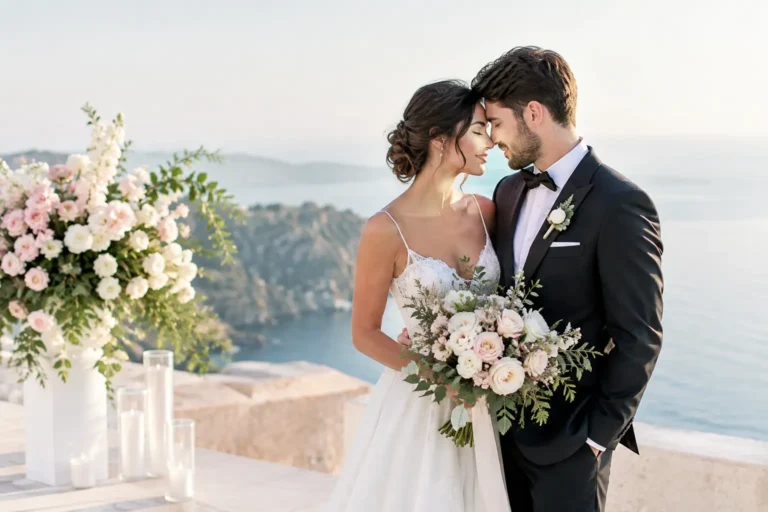
A destination wedding begins long before guests step into a sun-warmed courtyard or gather beneath a canopy of olive branches. It begins with a feeling: the particular light you want to remember, the pace of the weekend, the landscape that feels quietly connected to your story. Learning how to plan a destination wedding is less about transplanting a celebration abroad and more about letting a place shape an experience that feels natural, personal and beautifully considered.
The most memorable celebrations do not attempt to control every detail. They create a clear atmosphere, then leave room for the imperfect, generous moments that travel brings: a late-afternoon aperitivo, wind moving through linen tablecloths, cousins lingering over dinner because nobody needs to hurry home.
Begin with the emotional landscape
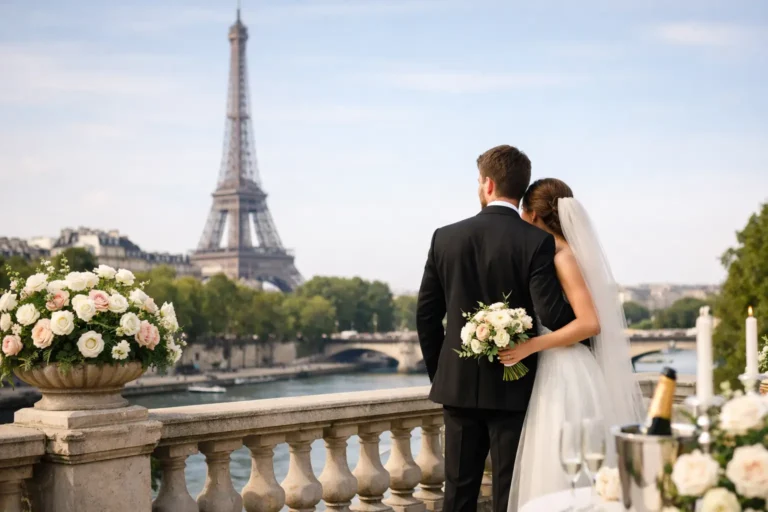
Before saving venues or comparing flight routes, decide what you want the gathering to feel like. Perhaps it is a long Mediterranean lunch, full of laughter and family-style serving. Perhaps it is an intimate city celebration, all candlelight, silk ribbon and a dinner party at a beautifully aged palazzo. The destination should support that feeling rather than simply look impressive in photographs.
Choose three words to guide every decision. They might be luminous, convivial and understated, or romantic, sculptural and relaxed. This small exercise gives you a useful filter when the options become endless. A grand ballroom may be exquisite, but not if the wedding you both imagine is barefoot, unhurried and close to nature.
It also helps to distinguish between a place you love visiting and a place that can comfortably host a wedding. A remote island may hold real meaning, yet require complicated boat transfers, limited accommodation and a fragile weather plan. That does not make it the wrong choice, but it does mean its sense of adventure should be worth the additional planning and cost.
Choose a destination with your guests in mind
The guest experience is part of the design. Think beyond the ceremony view and consider how everyone will arrive, move through the weekend and feel looked after when they are there. For guests travelling from the UK, a direct flight and a manageable transfer can make a profound difference, especially for older relatives, young children or anyone attending for only two nights.
Look at the rhythm of the destination as carefully as its beauty. In some regions, restaurants close on certain days, taxis are scarce after midnight, or a town becomes extremely busy during a local festival. In southern Europe, the height of summer can make a midday ceremony uncomfortable, while shoulder-season dates offer softer light, gentler temperatures and often better value. A wedding in late May, June, September or early October can feel every bit as radiant as one in August, with a little more ease around it.
Accommodation deserves early attention. You do not need to pay for every room, but offering a thoughtful range of options is kind and practical. Ideally, identify one special hotel or villa for your closest guests, one well-priced nearby option, and accessible choices for different budgets. If rooms are spread across a village or city, plan transport rather than assuming guests will find their own way after a celebratory dinner.
Visit at the right time, if you can
A site visit is not only for inspecting a ceremony terrace. It reveals the details that photographs cannot: the quality of afternoon light, the sound of a nearby road, the steepness of the walk from reception to dinner, and whether the venue feels as gracious in reality as it does online.
Try to visit during the same season and at a similar time of day to your celebration. Ask to see the rain option, sample a full dinner service and walk the guest journey from arrival to departure. If visiting is not possible, request recent videos taken in natural light, a detailed floor plan and a video call during the exact hours you expect to use each space.
Build a budget around the whole journey
Destination wedding budgets often become strained not because couples choose too many beautiful things, but because they budget only for the visible parts. The venue fee, food and flowers are important, yet travel, transport, local taxes, supplier accommodation, welcome events and contingency weather arrangements can change the overall figure quickly.
Start with a total you are genuinely comfortable spending, then reserve a contingency of around 10 to 15 per cent. From there, prioritise the elements that create the atmosphere you value most. For some couples, that is extraordinary food and a generous bar. For others, it is photography, floral artistry or a venue whose architecture requires very little additional decoration.
Be alert to what a venue includes. A lower hire fee can conceal costs for furniture, lighting, generators, glassware or a mandatory catering team. Equally, an all-inclusive property may offer excellent value if its tables, chairs, staff and accommodation already align with your aesthetic. Ask for a complete estimate in writing, including VAT or local equivalents, service charges, set-up time, overtime and any required supplier fees.
Work with local expertise, not against it
A planner who knows the destination can be one of the most valuable investments you make. They understand which suppliers are reliable, what is realistic within local regulations and how to communicate across language or cultural differences. More than that, a good planner protects the feeling of the day, resolving the logistics quietly so you can be present.
For a celebration with multiple moving parts, choose a full-service planner early. If you are planning a smaller gathering and enjoy managing details yourselves, a local coordinator for the final months and wedding day may be enough. The right level of support depends on your guest count, the complexity of the location and your own appetite for decision-making.
Let local craft lead the design. Rather than importing every object or recreating a Pinterest image exactly, notice what belongs to the place: hand-painted ceramics, seasonal fruit, regional linen, garden-grown foliage, local musicians or a menu built around one exceptional ingredient. These choices often look more refined because they are rooted in context. They also reduce transport, waste and the visual disconnect that can make a destination wedding feel staged.
Shape one visual story
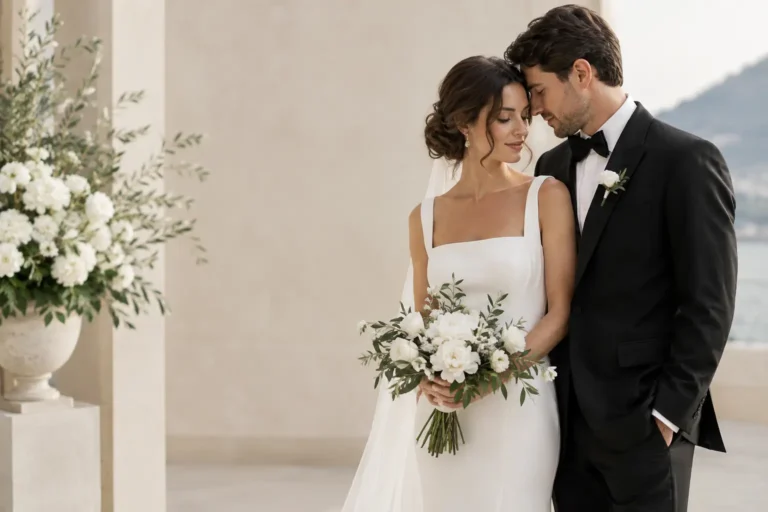
The strongest destination weddings have a point of view, not a matching set of decorations. Begin with the venue’s existing character. A stone masseria may call for cream paper, worn brass, loose olive branches and tactile silk. A Parisian townhouse may invite sculptural flowers, sharply tailored stationery and candlelight reflected in antique mirrors.
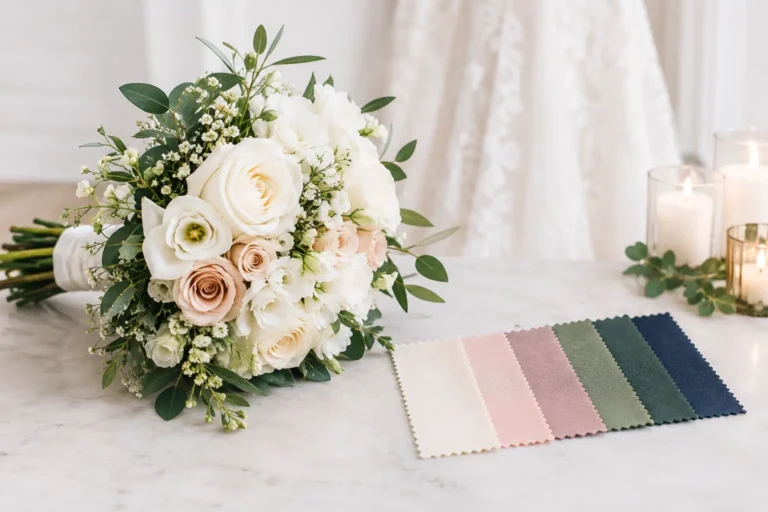
Create a concise design direction that includes colour, texture, floral mood, typography and lighting. It should be specific enough to guide your suppliers, but not so rigid that there is no room for their expertise. Think in layers: the permanent architecture, the practical furniture, the sensory details, then the personal touches that make the setting yours.
Lighting is especially transformative. Plan for the changing atmosphere from ceremony through dinner and dancing. Candles create intimacy, but check venue restrictions and use them alongside soft ambient lighting so guests can see one another, read menus and move safely. In outdoor settings, subtle illumination of paths and gathering areas is both beautiful and considerate.
Give guests a weekend, not an itinerary
Welcome events are lovely, but every hour does not need programming. Guests have travelled a long way and may need time to settle in, swim, explore or simply have a glass of wine together. One relaxed gathering before the wedding and a lingering breakfast or beach walk the following day can be more meaningful than a tightly scheduled series of activities.
Share practical information early and clearly: travel guidance, transfer options, dress expectations, weather notes and a local contact for urgent questions. A simple wedding website or well-designed information card can carry this without turning your stationery into a logistics manual. The tone matters. Make guests feel invited into your world, not instructed through it.
Protect the calm on the day
Destination celebrations reward a little flexibility. Build extra time into hair and make-up, transport, photography and dinner service. Confirm a weather plan that feels genuinely beautiful, rather than treating it as an afterthought. If rain would move dinner indoors, make the indoor room worthy of candlelight, flowers and the same care as the terrace.
Then release the details that do not deserve your attention. The best photographs are rarely made because every napkin lay perfectly still. They come from presence: the look exchanged during the ceremony, the familiar voices around one long table, the relief and joy of arriving at the moment you have imagined together.
Choose a place that lets you feel more like yourselves, not less. When the setting, the people and the pace are in harmony, the wedding becomes more than a beautiful trip. It becomes a shared memory with a sense of place that will stay luminous long after the journey home.

3 Comments