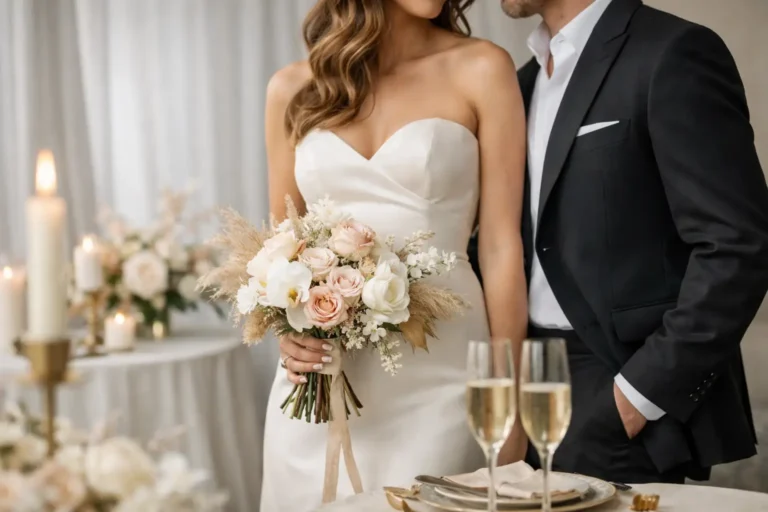
A beautiful small reception is not a scaled-down version of a larger wedding. It is an opportunity to notice more: the way late-afternoon light reaches the table, the pause before a toast, the warmth of every guest’s presence. The most memorable intimate wedding reception ideas begin with this shift in perspective. Rather than trying to fill a room or recreate a formal ballroom programme, create an evening that feels like your relationship at its most generous, relaxed and beautifully considered.
For a dinner of 15 or 50, intimacy comes from a clear atmosphere and a feeling of welcome. The details matter, but only when they support the people in the room.
Begin with one beautifully composed table
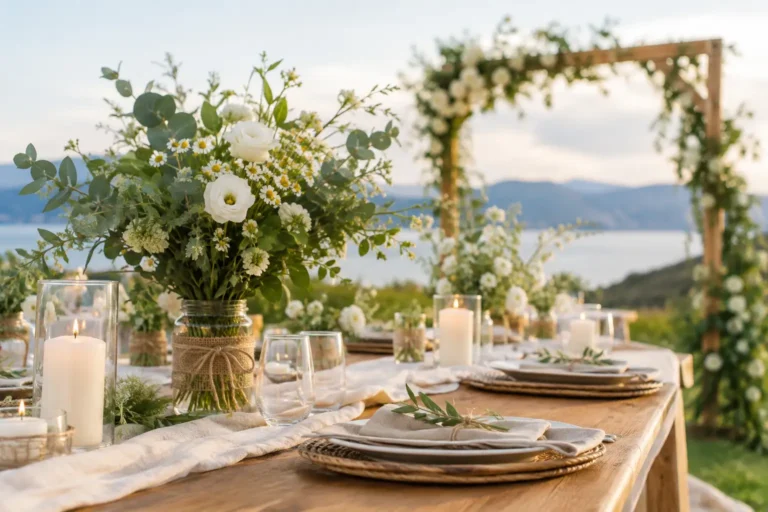
A single long table is one of the most evocative ways to make a small gathering feel intentional. It invites conversation across the meal and creates an immediate sense of occasion, particularly in a courtyard, private dining room, vineyard or family home. For a softer approach, choose two or three generous tables rather than many small rounds.
Keep the tablescape layered but breathable. Washed linen, taper candles in varied heights, seasonal fruit, hand-torn menu cards and low floral arrangements have more presence than an overfilled centrepiece. Guests should be able to see one another without peering through a wall of flowers. If the setting is already rich in character, such as an old stone orangery or a restaurant with patina, let its architecture do some of the work.
Let place settings carry a personal note
Place cards can become a quiet expression of care. Write each name by hand, tuck a pressed flower beneath a silk ribbon, or add a short line that recalls a shared memory. This is not about creating a favour at every setting. It is about giving guests the feeling that their place at your table was chosen with affection.
Shape the evening around a generous meal
For an intimate reception, food is often the main event rather than a pause between formalities. A seasonal, family-style supper encourages guests to pass plates, ask for another spoonful and settle into the rhythm of the table. It also feels naturally suited to destinations where local ingredients are part of the experience – coastal seafood in Portugal, garden produce in the English countryside, or a late-summer menu in Provence.
A plated dinner can be equally elegant, especially where service is exceptional or the menu has a more refined structure. The trade-off is atmosphere: a formal multi-course meal may feel quieter and more measured, while shared dishes bring immediate ease. Neither is better. Choose the format that reflects how you genuinely enjoy eating with the people you love.
Consider serving a signature cocktail on arrival, followed by wine selected for the menu rather than chosen simply to match a colour palette. A single, unforgettable dessert moment – a mille-feuille assembled at the table, a tower of small tarts, or warm madeleines passed with champagne – can feel more special than an elaborate sweet station.
Create candlelight in layers
Candlelight has a particular magic at smaller receptions because it changes the scale of the room. A modest dining space becomes intimate; a terrace becomes cinematic. Begin with taper candles along the table, then add votives at the bar, steps and lounge areas. If you are dining outdoors, sheltered glass vessels will keep the flame steady without interrupting the view.
Do not rely on candles alone. Soft overhead festoon lights, linen-shaded lamps or warm architectural lighting give depth and help guests move comfortably after dark. Avoid cool white lighting, which can flatten flowers, skin tones and the gentle mood you have worked to create.
Make the room feel lived in
A reception need not be filled with décor to feel complete. A lounge with velvet or linen seating, a few well-chosen lamps and a low table for after-dinner drinks can give guests somewhere to linger. At home or in a private villa, borrow the language of a beautiful dinner party: books, ceramics, framed photographs and fruit can feel more natural than rented objects placed without context.
The goal is not perfection. It is a room with texture, softness and somewhere for every conversation to land.
Choose music that follows the mood
Music is one of the most powerful intimate wedding reception ideas because it can guide the emotional arc without asking for attention. Welcome guests with a guitarist, jazz duo or a carefully curated playlist that suits the setting. During dinner, keep the volume low enough for stories and toasts. Later, let the energy rise gradually rather than switching abruptly from background music to a packed dance floor.
For some couples, a live band in a small room is exhilarating. For others, it can overwhelm the gathering. A pianist during supper followed by a DJ for a few joyful hours may be the right balance. If dancing is not central to your vision, replace it with something that is: an outdoor film, a courtyard aperitif, a late-night piano singalong or simply a second round of dessert and conversation.
Give tradition a more personal shape
A smaller guest list allows you to loosen the usual order of events. You might begin with speeches before dinner, when everyone is attentive and glasses are full. Or invite each guest to offer a brief toast between courses, if your group is comfortable with that kind of shared warmth.
Think carefully before adding every expected moment. A first dance can be deeply moving, but it does not need to happen because a timeline says it should. A cake cutting may be lovely if it marks the beginning of dancing, yet unnecessary if you would rather serve cake at the table. Keep the rituals that carry emotional meaning and release the rest.
Invite participation without creating pressure
The most successful interactive details are optional and unobtrusive. Set out a beautiful guest book with one thoughtful prompt, such as asking guests to share a piece of marriage advice or a memory from the day. Commission a live illustrator to capture candid scenes. Ask a close friend to read a poem during dessert.
Avoid turning every guest into a participant in a programme. Intimacy is not constant activity. It is the freedom to be present.
Design one unexpected moment
A reception becomes memorable when it contains a moment guests could not have predicted but will talk about afterwards. It might be a champagne coupe poured beneath olive trees, a surprise fireworks display viewed from a quiet hilltop, or a midnight walk to a nearby gelateria. It can be wonderfully simple: a tray of espresso martinis arriving just as the dancing begins, or blankets placed over chairs as the temperature drops.
The best surprise is rooted in place or personality. A destination wedding might include a local musician leading guests through the village. A couple who met in a bookshop might create a tiny after-dinner library corner with favourite poems. Resist adding novelty for its own sake. One meaningful flourish has more impact than five disconnected ideas.
Let photography preserve the in-between
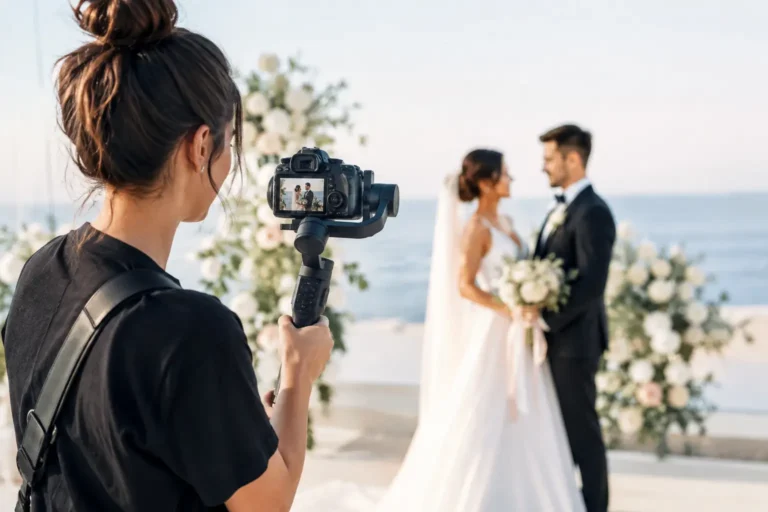
When the reception is intimate, ask your photographer to look beyond the formal moments. The hands passing bread, a grandparent laughing at the far end of the table, lipstick on a champagne glass, candlewax pooling beside a menu – these small scenes become part of the visual memory of the evening.
Build a little breathing room into the timeline so this can happen. A reception that is scheduled too tightly often feels less luxurious, whatever the budget. Leave space for an unplanned conversation, a second glass of wine, and the gentle drift from dinner into night.
An intimate reception is at its most luminous when it does not perform intimacy, but genuinely makes room for it. Choose the table, menu, music and rituals that bring your favourite people closer, then allow the evening to unfold with grace.