
A château at golden hour is difficult to resist, but the most memorable France wedding venues do more than create a beautiful frame for photographs. They set the pace of the whole celebration: the way guests arrive, where conversation gathers after dinner, whether the ceremony feels sun-warmed or candlelit, and how freely you can make the day your own.
For couples drawn to France, the choice is rarely between beautiful and less beautiful. It is between different kinds of beauty, each with its own rhythm, practicalities and emotional tone. A carefully chosen venue becomes the first brushstroke in an intentional piece of art.
France wedding venues begin with atmosphere
Before comparing capacities, packages or room counts, decide how you want the weekend to feel. Not how you want it to look in a single saved image, but how you want your guests to remember it. Perhaps it is a long table beneath plane trees, linen moving in the evening air and a dinner that lingers well past sunset. Perhaps it is a formal Parisian reception, where marble, candlelight and a string quartet give the gathering a more ceremonial sense of occasion.
This distinction matters because a venue with visual grandeur can still feel wrong for a relaxed, intimate celebration. Equally, an understated country property may not suit a couple hoping for the architectural drama of a black-tie evening. Let your desired atmosphere guide the search before an algorithm, or a particularly lovely staircase, does.
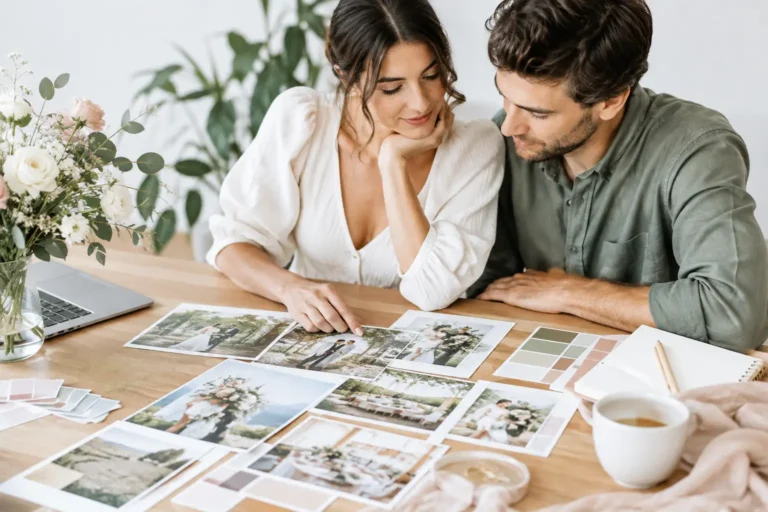
I often encourage couples to choose three words that describe the feeling rather than the décor. Consider luminous, convivial and unhurried; tailored, romantic and metropolitan; or elemental, intimate and wild. These words become useful filters when every château, vineyard and bastide begins to blur together.
Choose a French region with care
France offers remarkably distinct wedding landscapes, and the setting affects much more than the view. Travel routes, weather, supplier availability, local cuisine and the amount of time your guests can spend together all change from region to region.
Provence for sun-softened celebrations
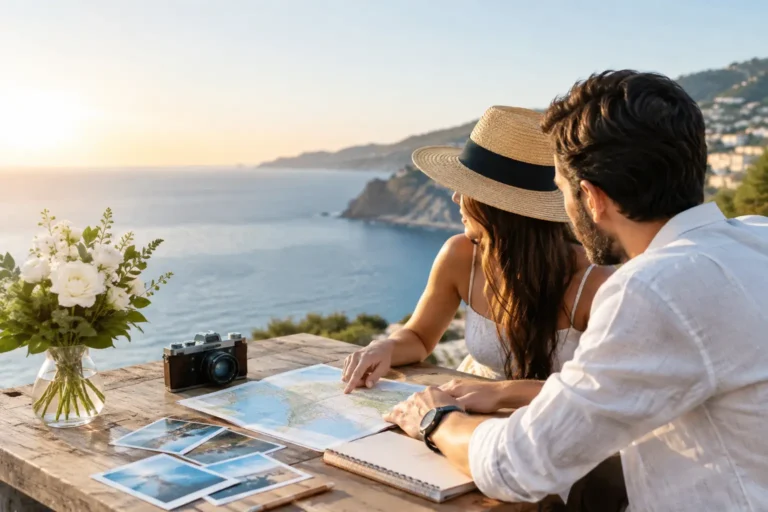
Provence is beloved for good reason: pale stone, cypress trees, lavender-toned horizons and a naturally generous relationship with outdoor living. It suits couples imagining al fresco dinners, olive branches, sculptural florals and a warm, relaxed palette. The trade-off is that its most popular months are hot, highly sought after and sometimes windy, particularly in areas touched by the Mistral.
A Provençal venue works beautifully when it has a genuine indoor alternative that feels considered, rather than a functional room saved only for rain. Ask to see photographs of a real indoor dinner, not merely a floor plan. High summer also calls for shade, water and a ceremony time that respects guests in formal clothes.
The Loire Valley for château romance
The Loire Valley brings the fairytale architecture many couples picture when they first consider France. Grand façades, formal gardens and elegant interiors make it a natural choice for a refined, editorial celebration. It can be especially compelling for a multi-day wedding, with nearby villages and a slower, more pastoral sense of place.
Yet château scale deserves careful handling. If you are inviting 35 people, a vast ballroom may feel more imposing than intimate. Look for venues with smaller salons, courtyards or garden rooms that allow the celebration to feel gathered rather than lost in its surroundings.
Bordeaux and the south-west for vineyard warmth
For wine-loving couples, the Bordeaux region and wider south-west offer a wonderful balance of polish and ease. Vineyards give a wedding its own sense of ritual: an arrival through the vines, an aperitif overlooking the estate, then a dinner shaped by local produce and generous pours. These properties often lend themselves to an elegant but unfussy design direction, with textured linens, seasonal fruit and floral work that feels connected to the landscape.
Harvest periods can make vineyards particularly busy, however, and rural transport needs early thought. If most guests are travelling from the UK or further afield, plan clearly for transfers and avoid assuming everyone will be comfortable driving after a celebratory dinner.
Paris, Normandy and the French Riviera
Paris is for couples who want an urban celebration with history, fashion and a little theatricality. A private hôtel particulier, a garden pavilion or an intimate restaurant can feel deeply romantic without requiring a full countryside weekend. Space is often more limited, and accommodation may be spread across the city, but that energy can be part of the appeal.
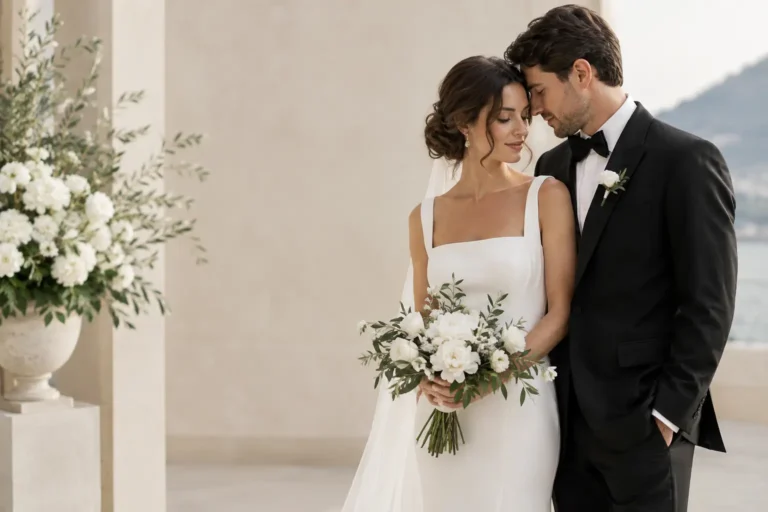
Normandy offers softer light, historic manors and a more understated kind of French romance, particularly attractive for spring and early autumn. The Riviera, meanwhile, delivers sea views, hilltop villages and glamorous late-night possibility. Both reward couples who accept their specific character rather than trying to impose a Provence wedding onto a coastal or northern setting.
Look beyond the ceremony view
A venue is experienced in chapters. The ceremony backdrop is only one of them. Think about the entrance, the first drink, the transition into dinner, the place older relatives can sit comfortably, and the final hour when music and mood take over.
The strongest spaces create a natural progression without needing excessive signage or styling. Guests should understand where to go because the architecture, light and flow gently lead them there. A courtyard may be perfect for champagne but too exposed for dinner. A magnificent dining room may photograph beautifully but require careful acoustic planning once 100 guests are speaking at once.
Ask for a full event-day walk-through, ideally at the same season and a similar time of day as your celebration. Notice where the sun falls during the ceremony hour, how far guests walk between moments, and whether there are enough loos, shade and quiet corners. These details are not separate from the aesthetic. Comfort is what allows an atmosphere to feel effortless.
Ask questions that protect the feeling
The most beautiful venue can become restrictive if the commercial details are unclear. A thoughtful shortlist should include questions about exclusivity, accommodation, catering, music and contingency plans, alongside the more obvious hire fee.
Confirm whether you may bring your own planner, florist, caterer and bar team, or whether an approved supplier list is required. Neither approach is automatically better. A trusted in-house team can remove complexity, while external creative freedom may matter more if you have a distinct design vision. What matters is knowing the limits early enough to build a realistic budget.
Also establish the practical boundaries with precision: the end time for amplified music, whether a next-day gathering is possible, the cost of furniture upgrades, the availability of power outdoors, and what happens if rain arrives during dinner. Some venues permit a tent but have strict placement rules; others have a covered terrace that makes a graceful backup possible. Do not settle for the phrase ‘we will make it work’. Ask exactly how it works.
For international couples, legalities deserve their own conversation. A legal civil marriage in France can involve residency and administrative requirements that do not suit a destination timeline. Many couples complete the legal ceremony at home and hold a symbolic ceremony in France, but confirm your individual position with the relevant authorities and your planner well before invitations are sent.
Let the venue lead the design, not dictate it
A distinctive French property already has a visual language. The aim is not to cover it, but to listen to it. In a weathered stone courtyard, a restrained palette of cream, tobacco, soft peach and faded blue may feel more resonant than an overly polished scheme. In a gilded Paris salon, contemporary paper goods and sculptural florals can bring freshness without competing with the room.
This is where editing becomes a luxury. Rather than adding more, repeat a few meaningful elements with intention: the shape of the invitation, a particular ribbon, a favourite bloom, the warm glow of taper candles at dusk. When the setting, tablescape, stationery and attire speak to one another, the wedding feels personal rather than themed.
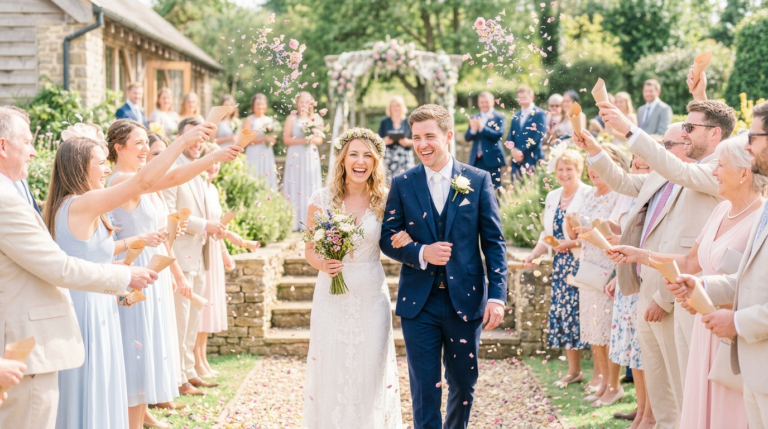
It is equally worth protecting moments of contrast. A formal château dinner can be followed by a joyful, less polished dance floor. A rustic vineyard setting can hold a beautifully tailored ceremony with exceptional music. These shifts give a celebration life and keep it from feeling like a still image.
Give guests a reason to linger
France is at its most generous when a wedding becomes more than one evening. If the venue allows it, consider an intimate welcome supper, a morning market visit, a poolside lunch or a farewell brunch with good coffee and the leftovers of the wedding cake. The best additions are not elaborate programmes. They simply give people time to settle into the place and one another.
If your guests are travelling a long way, make the experience legible and kind. Share realistic arrival guidance, indicate whether heels are sensible on gravel, arrange late-night transport where needed and avoid a schedule that relies on everyone being precisely punctual after an international journey. Graceful hosting is a form of design.
The right venue will not only flatter your photographs. It will make room for the small, unrepeatable things: your grandmother taking in the view before dinner, friends lingering under the trees, the hush before you walk into the ceremony. Choose the place that gives those moments somewhere beautiful to land.
One Comment