A Saturday in high season can carry a premium before a single candle is lit. For couples with flexibility, the question is understandably compelling: are weekday weddings cheaper? Often, yes. But the real value is not simply a smaller venue invoice. A weekday date can create room for a more considered menu, extraordinary flowers or an intimate setting that might otherwise sit beyond reach.
The important distinction is this: a weekday wedding is not automatically inexpensive. It is an opportunity to redistribute your budget with intention, while being honest about guest travel, supplier availability and the kind of celebration you want to create.
Are weekday weddings cheaper in practice?
Most often, venues charge less from Monday to Thursday because demand is lower than it is for a Saturday. The difference can be meaningful, particularly at country houses, city hotels and destination properties with coveted weekend dates. Some venues offer reduced hire fees, more attainable minimum spends or additional time in the space. Others hold their pricing steady but are more open to bespoke packages.
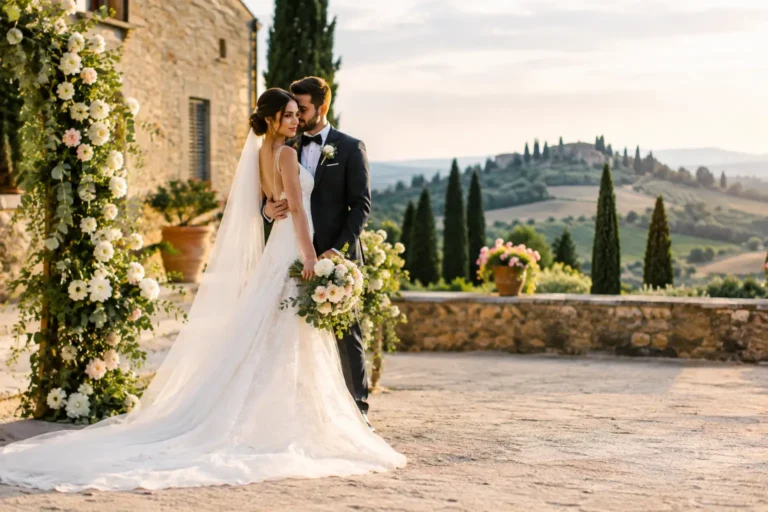
The same can apply to accommodation. If you are planning a destination wedding in Tuscany, the South of France or a British countryside escape, midweek room rates may be lower and minimum stay requirements less restrictive. This can make it easier to host a welcome supper, linger over breakfast the next morning, or reserve a more characterful property for your closest people.
Yet pricing varies. A sought-after venue may not discount at all, especially during summer, school holidays or around bank holidays. Equally, a Thursday wedding in June can be more expensive than a Sunday in February. Ask for a full range of dates rather than assuming that every weekday is equal.
Where a weekday date can save money
The venue is usually the clearest area of saving, but it is not the only one. With less competition for dates, some suppliers have more freedom to offer a tailored proposal or add value in ways that suit the event. This might mean a longer photography collection, a more generous bar package or access to a private dining room usually unavailable on a Saturday.
Venue hire and food and drink minimums
Many beautiful venues work with a sliding scale. Friday and Sunday may sit just below Saturday pricing, while Monday to Wednesday offers the most significant reduction. Rather than focusing only on the hire fee, look closely at the food and drink minimum. For a design-led wedding, this figure often shapes the budget more than the room itself.
A lower minimum can be particularly useful for a smaller guest list. It allows you to choose a space for its atmosphere – old stone, soft plaster walls, a garden in late-afternoon light – without feeling pressured to inflate the guest count or add unnecessary extras simply to meet a weekend spend.
Accommodation and travel
For a destination celebration, weekday travel can be gentler on guests’ budgets, especially outside peak holiday periods. Flights and hotel rooms are not always cheaper, but they are often easier to secure. Guests may also have more choice in room categories, which matters when everyone is staying close together.
There is a trade-off. Midweek travel may require more annual leave, and not every guest can manage it. This is worth weighing with care if your guest list includes parents of school-age children, people in inflexible roles or loved ones travelling long distances. A wedding should feel welcoming, not like a logistical test.
Select suppliers and thoughtful upgrades
Florists, photographers, musicians, stationers and stylists may be more available midweek, though luxury suppliers do not necessarily charge less. Their pricing reflects expertise, preparation and the quality of materials, not only the day of the week.
Still, availability has its own value. You may be able to work with the creative partner whose eye genuinely reflects your vision, rather than settling for whoever has a Saturday free. A weekday date can also leave space in the budget for the details guests feel: seasonal floral abundance, beautifully printed menus, live music during dinner, or a dessert served beneath a candlelit canopy.
The costs that may not change
It is tempting to expect a weekday date to reduce every line of the budget. In reality, many costs remain fixed. Wedding attire, rings, stationery, beauty appointments, cake design and planning fees are usually based on craft and scope. Your photographer still edits the same number of images; your florist still conditions each stem and builds each arrangement with care.
Guest transport can also complicate the picture. A weekday ceremony may call for coaches from a nearby station, an earlier rehearsal dinner, or an extra night of accommodation for immediate family. If you are marrying abroad, you may decide to host more meals so guests feel looked after across several days.
There is no reason to avoid these choices. They can make the experience more generous and relaxed. Simply include them in your comparison before deciding that a weekday is the lower-cost option.
How to make a weekday wedding feel effortless for guests
The most memorable weekday weddings acknowledge that people are stepping away from ordinary routines. The atmosphere should reward that generosity with clarity, warmth and a pace that feels easy.
Choose a schedule that respects travel. A later ceremony gives local guests time to arrive without rushing, while an early-evening celebration can work beautifully in a city venue. For a destination wedding, sharing the weekend’s outline well in advance helps guests arrange leave and flights with confidence.
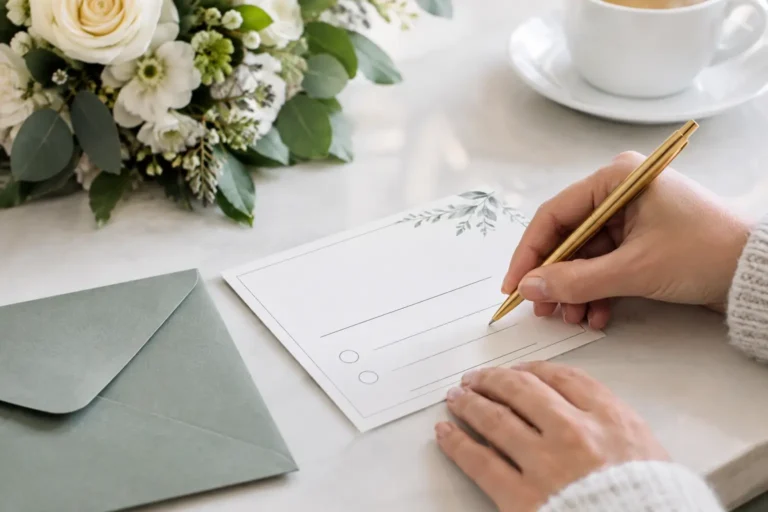
Your invitation suite can set the tone before anyone reaches the venue. Include the date prominently, offer thoughtful accommodation guidance and make transport details easy to understand. A simple welcome drink the evening before, or coffee and pastries the morning after, can turn a single Wednesday into a small, luminous holiday shared with the people you love.
The design itself need not announce that the wedding is midweek. Let it be what it is: an intimate gathering shaped by your story. Perhaps dinner is served at one long table beneath olive trees, perhaps a civil ceremony takes place in a quiet gallery followed by champagne and oysters, perhaps the dance floor opens in a candlelit room while rain gathers softly at the windows. The date is practical. The feeling can be entirely romantic.
A clearer way to compare dates
When a venue sends proposals, ask for the same celebration priced across two or three dates. Compare like for like: guest count, hire period, menu, drinks, accommodation, ceremony fee, service charge and VAT. A lower headline price can lose its appeal if it comes with a shorter access window or higher minimum spend.
It also helps to decide where savings would go before you book. If choosing a Tuesday means you can commission stationery you will keep forever, offer your guests an exceptional dinner or book the photographer whose work feels like art, that is a purposeful exchange. If the saving disappears into additions that do not matter to you, a weekend date may be the simpler choice.
For some couples, a Thursday offers the sweet spot: a quieter rate than Saturday with a natural bridge into a long weekend. For others, a Monday or Tuesday creates the most intimate, unhurried mood and the strongest financial advantage. The right answer depends on your guests, the destination and the experience you want everyone to carry home.
A wedding date is not merely a square on the calendar. Choose the one that gives your celebration room to breathe, lets your priorities take shape, and gathers your favourite people into a setting that feels unmistakably yours.