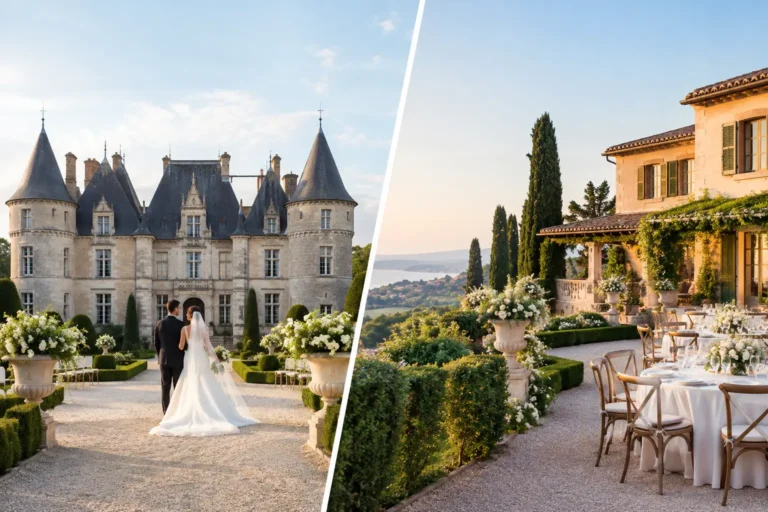
The most memorable Tuscan celebrations rarely begin with a grand theme. They begin with a feeling: late-afternoon light warming weathered stone, the scent of rosemary beneath a terrace, guests gathering slowly over an aperitivo as the landscape turns honeyed. This Tuscan villa wedding example is shaped around that particular kind of atmosphere – refined, generous and beautifully unforced.
Rather than treating a historic villa as a backdrop to fill, this approach lets the setting lead. The architecture, surrounding olive groves and faded frescoes already carry character. The design work is in adding a personal point of view without obscuring what has made the place special for centuries.
A Tuscan villa wedding example with a sense of place
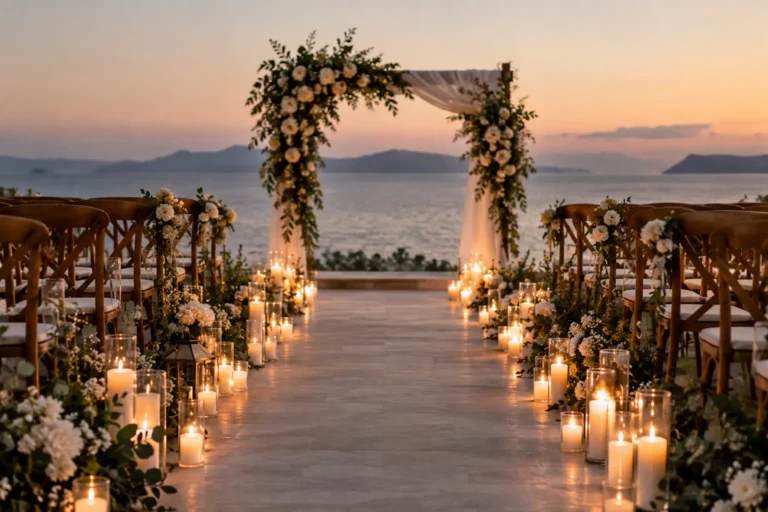
Picture an intimate September wedding for 58 guests at a family-run villa outside Florence. The ceremony takes place in a cypress-lined garden, where the aisle is softened by meadow-like arrangements of cream cosmos, pale blush dahlias and loose sprigs of olive. There is no floral arch. Instead, two sculptural urns at the ceremony entrance establish a gentle sense of occasion, while the view beyond remains open.
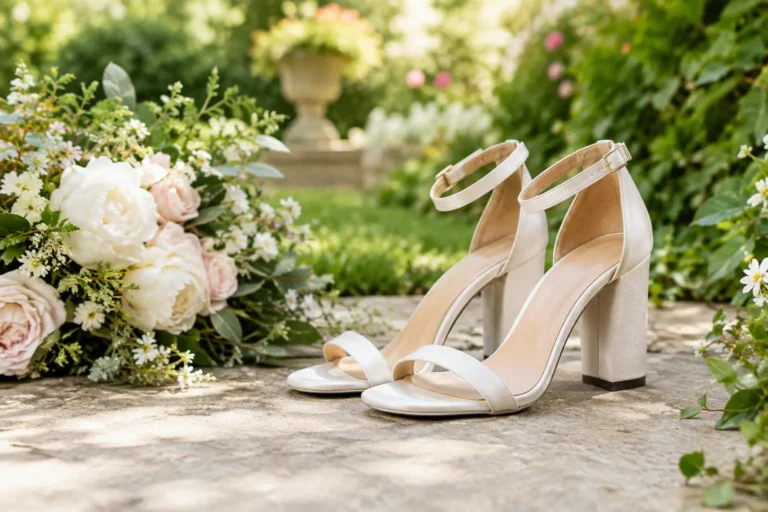
The bride wears a silk crepe gown with a clean, architectural neckline and a cathedral-length veil edged in the finest lace. Her bouquet is deliberately understated: garden roses, scabiosa, olive and trailing jasmine. The groom chooses a softly tailored black dinner jacket for the evening, changing from a lightweight ivory jacket worn for the ceremony. Both looks feel considered against the sun-washed stone, but neither asks the setting to become something it is not.
This restraint matters. Tuscany can easily become a collection of familiar visual cues: lemons, terracotta, rustic signage and a great deal of olive green. Those details may be lovely when they mean something to the couple or reflect the villa itself. But a more lasting result comes from observing the venue first. Is the plaster cool grey or sun-baked ochre? Are the gardens formal, wild or agricultural? Does the villa feel quiet and monastic, or exuberant and frescoed? The answers should guide the celebration’s palette and mood.
Let the villa set the colour story
For this wedding, the palette is drawn from a frescoed dining room: parchment, faded apricot, antique rose, warm brown and a small note of deep wine. It feels more nuanced than a standard neutral scheme and photographs beautifully from midday into candlelight.
Stationery introduces these tones in a subtle way. Invitations are printed on softly textured ivory stock, with a warm sepia illustration of the villa on the envelope liner. Hand-torn edges and restrained calligraphy offer romance without becoming overly ornate. At each place setting, a simple menu is tied with a narrow silk ribbon in muted rose, accompanied by a single olive leaf.
The benefit of a limited palette is not merely visual consistency. It creates calm. Couples planning a destination wedding are often shown an endless stream of beautiful ideas, each compelling on its own but disconnected together. Returning to three or four colours, along with the natural materials already present at the venue, makes individual decisions feel clearer. It also gives suppliers room to interpret the design with artistry rather than trying to match a rigid image board.
Texture creates the luxury
Luxury in a Tuscan villa is often tactile rather than glossy. It is linen that moves in the evening breeze, hand-thrown ceramic plates, aged brass candleholders and fruit that looks as though it belongs on the table because it does. For the dinner, long tables are dressed in natural linen with a narrow runner of loosely gathered foliage, roses and dahlias. The arrangements sit low enough for conversation, punctuated by clusters of taper candles in ivory and tobacco shades.
Amber glassware brings warmth as daylight fades. A mixture of antique-style chairs, perhaps sourced locally, prevents the dining area from looking like a ballroom transported outdoors. Each choice is modest in isolation. Together, they create depth.
There is a useful distinction here: layered does not mean crowded. If the table already has beautifully patterned plates, coloured glassware, menus, flowers, fruit and candlelight, it does not also need oversized centrepieces or elaborate favours. Leave moments of visual quiet. They make the handmade and meaningful details easier to notice.
Design the day around light and pace
A Tuscan wedding earns its romance through timing as much as décor. In high summer, an early afternoon ceremony can be uncomfortable for guests and harsh for photographs. A later ceremony, followed by drinks as the heat softens, is often the more elegant choice. In spring or autumn, the light may allow for a little more flexibility, although the air can cool quickly after sunset.
For this example, guests arrive at 4.30pm for chilled prosecco with elderflower and small bowls of salted almonds. The ceremony begins at 5pm. Family photographs happen immediately afterwards in the shade of the courtyard, before the couple takes a short walk with their photographer through the gardens during the last luminous part of the day.
Aperitivo is given real time, rather than treated as a brief interval before dinner. A live string trio plays Italian cinema melodies while waiters circulate with seasonal crostini, fried sage leaves and small cones of truffle pecorino. Guests settle into the place rather than being hurried from one formal moment to the next.
Dinner begins at a table placed beneath the villa’s plane trees. If the forecast is warm and stable, this open-air setting is incomparable. Yet a beautiful wet-weather plan is essential, not pessimistic. A frescoed hall, covered loggia or clear-sided marquee can be made equally inviting with candlelight, layered linens and a thoughtfully adjusted floor plan. The least romantic choice is pretending that weather will not matter until it does.
Make the Italian details personal, not performative
The local elements of a destination wedding should feel like hospitality, not costume. A thoughtfully chosen regional menu, estate wine and locally made ceramics offer guests a true sense of place. They are more compelling than adding motifs simply because they are expected.
Here, the couple serve a menu inspired by meals they enjoyed during a previous holiday in Tuscany: delicate ricotta ravioli with sage butter, slow-cooked beef with seasonal vegetables, and a late-summer peach dessert with almond cream. A small millefoglie is assembled after dinner, an animated and celebratory alternative to a towering formal cake. The evening ends with espresso, amari and dancing in the villa’s old wine cellar.
Personal history can appear in quieter ways too. Perhaps the bride’s grandmother’s gold locket is wrapped around her bouquet. Perhaps the menu includes a favourite family recipe reinterpreted by the chef. Perhaps the couple ask guests to write notes for their first anniversary, rather than leaving a conventional guest book. These gestures are not designed for the camera, though they will be remembered long after the flowers have faded.
Where to spend and where to soften
A villa wedding can look lavish, but it is wise to be selective about where investment has the greatest emotional and visual return. Food and wine, lighting, floral design and an experienced photographer tend to shape how the day feels and how it is remembered. Transporting large quantities of hired décor from abroad often brings cost and complication without the same impact.
It also depends on the villa. A dramatic property with ornate interiors may need little more than excellent florals and candlelight. A simpler agriturismo may benefit from more considered furniture, textiles and lighting to create a formal dinner atmosphere. Work with the venue’s strengths rather than trying to impose a single version of luxury on every setting.
There is also grace in leaving room for life to happen. A passing breeze may lift a veil. A toast may run longer than planned. Guests may linger under the trees because the conversation is good. The most beautiful Tuscan villa wedding example is not one that controls every frame. It is one that creates enough intention for everyone to relax into the story being told.