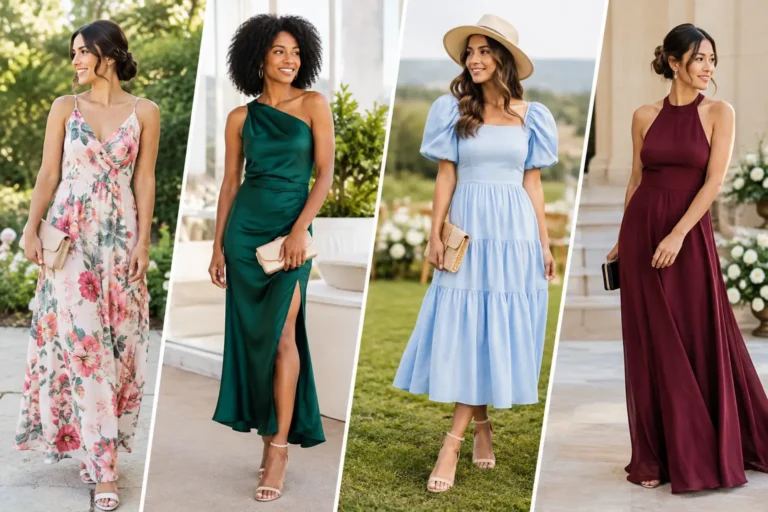
A beautifully phrased dress code does more than tell guests what to wear. It begins the atmosphere of the day before anyone arrives. This wedding dress code wording guide is designed to help you express your vision with grace, whether you are planning candlelit supper in a London townhouse, a black-tie celebration in the Cotswolds, or a relaxed gathering along the Mediterranean coast.
The most effective wording feels specific without becoming prescriptive. Guests should understand the level of formality, the setting and any practical considerations, while still having room to feel like themselves. Think of the dress code as part of the invitation suite’s visual language: a small but meaningful gesture that says, we have thought about your experience.
Start with the feeling, then name the dress code
Before choosing a familiar label, consider how you want the celebration to feel. Formality is only one part of the picture. A black-tie evening wedding can be traditional and grand, but it can also be soft, modern and intimate. A garden party may suggest ease, yet still call for considered silhouettes and polished accessories.
Choose a recognised dress code where possible, then add one short line that brings it to life. This approach gives guests clarity without leaving them to decode poetic language alone. “Elegant attire” may sound lovely, but different guests will interpret it very differently. Pairing it with practical direction makes the invitation more generous.
For example, rather than simply writing “formal”, you might write: “Formal attire. We invite floor-length dresses, tailored suits and an evening of candlelit celebration.” The first phrase sets the expectation; the second lends warmth and imagery.
Wedding dress code wording guide by formality
White tie
White tie is exceptionally formal and works best for grand evening celebrations, historic venues and occasions where tradition is central to the experience. It asks for full evening dress: tailcoats and white bow ties for men, with full-length gowns for women.
> White tie. An evening of formal dress, black tailcoats and full-length gowns.
Use this only when you truly mean it. White tie can create a striking visual moment, but it requires more investment from guests and may feel at odds with a relaxed destination weekend or informal family gathering.
Black tie
Black tie remains one of the clearest and most elegant dress codes. Traditionally, it calls for dinner jackets or tuxedos, bow ties and polished evening shoes, alongside floor-length gowns, sophisticated midi dresses or elevated evening separates. It is ideal for an after-dark reception, particularly in a ballroom, villa, country estate or city venue.
> Black tie. Join us for an elegant evening of dinner jackets, evening gowns and champagne beneath the stars.
For a slightly less formal interpretation, “black tie preferred” gives guests the direction without making the request feel absolute. This can be a thoughtful choice for a wedding with a wide range of ages, budgets or international guests.
> Black tie preferred. We would love you to dress for a glamorous evening celebration.
Formal or black-tie optional
Formal attire creates a polished look while allowing more flexibility than black tie. Guests can choose a tuxedo or a dark suit, a full-length gown or a refined cocktail dress. It suits celebrations that are elevated but not rigid, especially ceremonies followed by dinner and dancing in a beautiful venue.
> Formal attire. Think tailored suits, elegant dresses and an evening palette of rich, timeless colour.
If colour is a meaningful part of your design, mention it as inspiration rather than a demand. “Autumnal tones are warmly welcomed” feels far more inviting than an exhaustive list of approved shades. Reserve strict colour direction for wedding party members unless a coordinated guest look is central to the occasion.
Cocktail attire
Cocktail attire is polished, celebratory and wonderfully versatile. It is a natural fit for restaurant receptions, city weddings, stylish garden celebrations and destination ceremonies that begin in late afternoon. Guests might wear suits with ties, midi dresses, dressy jumpsuits or elevated separates.
> Cocktail attire. We invite you to celebrate in colourful cocktail dresses, tailored suits and your favourite evening accessories.
Be mindful of the word “cocktail” for a countryside or outdoor event. Guests may still need to navigate grass, gravel or uneven paths. A light practical note, placed beneath the dress code, is often all that is needed: “The ceremony will take place on the lawn, so block heels are encouraged.”
Smart casual
Smart casual is often the hardest dress code to phrase because it can mean so many things. It is best for a relaxed brunch, a welcome party, a small civil ceremony or a daytime wedding where comfort matters. The goal is considered rather than formal: linen suits, printed dresses, smart trousers and beautifully finished flats all make sense here.
> Smart casual. Think relaxed tailoring, summer dresses and easy elegance for an afternoon in the garden.
Avoid using “casual” alone unless you genuinely welcome jeans and trainers. Most couples still want guests to arrive looking celebratory, even when the day is deliberately informal.
Beach or destination attire
Destination celebrations call for wording that reflects both beauty and reality. Heat, sea air, stone paths and local customs affect what guests can comfortably wear. “Beach formal” can be useful, though it benefits from a little explanation.
> Beach formal. Light suits, flowing dresses and dressy sandals are perfect for our seaside celebration.
For a European villa wedding, you might choose language with a little more formality: “Mediterranean cocktail attire. Think linen tailoring, elegant dresses and soft, sun-washed tones.” This creates a visual direction while allowing guests to pack sensibly.
Add practical notes without crowding the invitation
Your main invitation should remain calm and beautifully edited. The dress code itself can sit on the details card, wedding website or a separate enclosure, where a few additional notes will be genuinely useful. Consider the questions guests might otherwise have: Is the ceremony outdoors? Will the evening become cool? Are heels practical? Is there a religious setting that calls for covered shoulders?
A single sentence is usually enough. “Please bring a light layer for dinner on the terrace” is kinder and more elegant than leaving guests to discover the evening wind for themselves. Similarly, if a venue has a no-stiletto policy, say so plainly and early. Good hosting is rarely about adding rules; it is about removing uncertainty.
If you are asking guests to avoid white, save the request for a gentle note rather than making it the centrepiece of the dress code. In many settings, it is already understood, but a destination wedding with multiple cultural traditions may benefit from clarity.
> We kindly ask that guests reserve white and ivory for the bride.
Let the invitation design support the message
Wording is only one part of what guests will read. A letterpressed invitation in deep ink, a formal serif typeface and an evening ceremony time naturally suggest a more elevated dress code. Hand-painted lemons, relaxed script and a midday ceremony offer a different cue. Your stationery should not replace clear instructions, but it can make the chosen direction feel intuitive.
This is especially helpful when your celebration blends styles. Perhaps you are marrying in a historic French château but serving a long, relaxed dinner outdoors. “Black tie preferred” paired with a warm, painterly invitation suite may communicate the balance more gracefully than trying to explain every nuance in text.
When a theme helps and when it becomes a burden
A focused style note can create lovely cohesion. A request for “festive colours”, “pastel tones” or “a touch of sparkle” can make guests feel part of the visual story, particularly for a winter celebration or a vibrant destination weekend. Yet themes become less successful when they are too narrow, too costly or difficult to interpret across bodies, genders and cultures.
If you love the idea of a palette, offer it as an invitation rather than an instruction. “Our palette is inspired by olive leaves, warm stone and soft blue skies” gives a sense of place without expecting everyone to match the tablescape. The most memorable wedding photographs tend to feel layered and lived-in, not overly controlled.
A final edit before you send
Read the wording as a guest who has never visited the venue and does not share your Pinterest board. Could they confidently choose an outfit? Would they know if they need a wrap, sensible shoes or something more formal than they might usually wear? If the answer is yes, your note is doing its work.
The loveliest dress code wording makes people feel anticipated, not managed. Offer a clear frame, leave space for personal style, and your guests will arrive ready to celebrate the atmosphere you have so thoughtfully created.