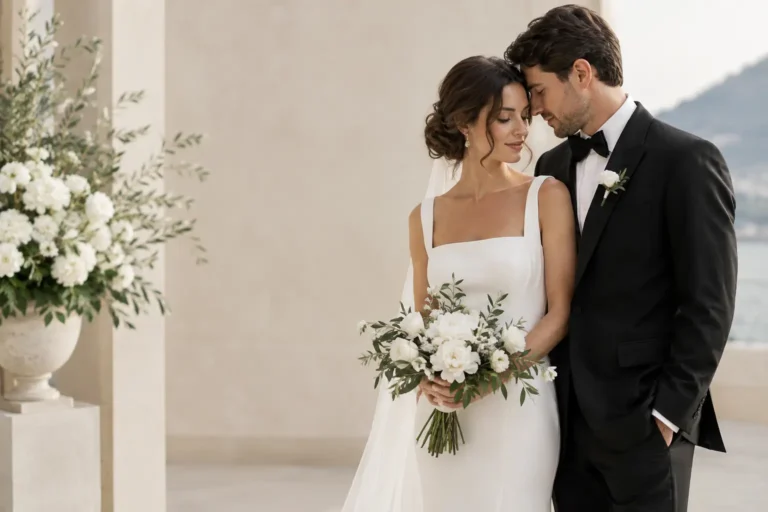
A beautifully considered wedding does not need an excess of objects to feel abundant. The most memorable rooms are often shaped by a few meaningful gestures: candlelight reflected in old glass, linen softening a long table, branches gathered with an artist’s eye. These eco friendly wedding decoration ideas are for couples who want their celebration to feel luminous and deeply personal, while making choices that respect the places, materials and people involved.
The aim is not perfection. A wedding is a gathering, and gatherings create waste. Instead, focus on reducing what is disposable, choosing what can be reused, and letting natural materials bring the richness. This approach has a quiet luxury of its own: less clutter, more atmosphere.
Eco friendly wedding decoration ideas with lasting beauty
1. Begin with the venue’s existing character
A historic dining room, a sun-warmed courtyard, a glasshouse or a family garden already offers texture, scale and a sense of place. Work with its architecture rather than attempting to disguise it. Exposed stone, timber tables, patterned tiles and established planting can reduce the need for hired backdrops, draping and elaborate constructions.
Before ordering décor, ask what the space needs after sunset. Often, the answer is simply considered lighting and a few layers at table level. This is also where a destination wedding can become more authentic: honour the landscape, rather than importing a look that could belong anywhere.
2. Hire the pieces that set the tone
Hiring dinnerware, glassware, table linen, lounge furniture and candleholders is usually more thoughtful than buying new items for one evening. It also allows you to select materials with genuine presence – weighty cutlery, softly coloured water glasses, aged brass or sculptural ceramic vessels – without filling a cupboard afterwards.
Choose a tightly edited collection rather than mixing too many decorative moments. Repetition creates polish. A single beautiful linen, paired with one glass colour and one metal finish, can look far more intentional than a table crowded with novelty.
3. Let seasonal flowers lead the palette
Seasonal, locally grown flowers are one of the loveliest routes to a lower-impact floral story. They tend to suit the light and landscape of the date you have chosen, whether that means meadow-like sweet peas in early summer, dahlias in late August or flowering branches in spring.
Ask your florist for designs made without floral foam, which is difficult to reuse and can shed microplastics. Mechanics such as reusable frogs, pin holders, chicken wire and carefully constructed vessels can achieve a generous, garden-inspired effect. Availability will always vary by region and weather, so give the flowers permission to guide the final palette rather than insisting on a specific bloom flown from afar.
4. Choose foliage with purpose, not filler
A branch placed with confidence can be more striking than dozens of small arrangements. Consider olive, beech, ivy, herbs or seasonal foliage sourced close to the venue, provided it is responsibly gathered and approved by the landowner. Potted citrus, bay or olive trees can create a Mediterranean softness around an entrance or ceremony space, then be replanted or gifted afterwards.
For tables, use foliage sparingly enough that guests can still see one another. Romance is not only in flowers. It lives in conversation, candlelight and the ease of a table that invites people to linger.
5. Use potted plants as living décor
For an outdoor wedding, potted herbs, small trees and flowering plants create dimension without becoming single-use arrangements. Lavender, rosemary and scented geraniums can frame a ceremony aisle or seating plan, then travel home with family members or be planted in a garden.
This idea works best when the plants suit the climate and the season. Avoid treating living plants as props that will sit in harsh sun or cold for hours without water. A little care behind the scenes makes the gesture feel as considered as it looks.
6. Style tables with natural textiles
Linen has an ease that polished synthetics rarely match. A softly wrinkled tablecloth, a washed cotton runner or individual linen napkins introduces texture while allowing flowers and food to remain the focus. Hire where possible, or choose textiles you will genuinely use after the day.
If you are purchasing, select neutral shades that will live beyond the wedding: warm ivory, oat, stone, faded rose or deep olive. Personalised napkins can be lovely, but only if they are made as gifts guests will want to take home, not as a monogrammed obligation.
7. Make candlelight the main event
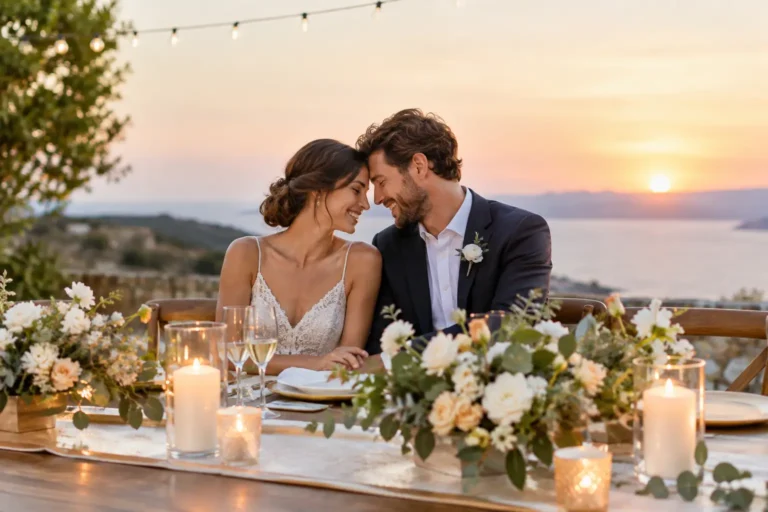
Light is one of the most transformative decorative materials, and it requires no elaborate set build. Clusters of taper candles in reusable holders, hurricane lanterns along paths and votives on tables create warmth as daylight fades. Choose unscented candles around food, and check your venue’s fire policy before committing to a candle-heavy design.
For outdoor settings, lanterns protect flames from the breeze and lend a more relaxed, European feeling. Avoid tiny, individually packaged favours masquerading as décor. A room illuminated well needs very little else.
8. Reuse ceremony flowers at the reception
Plan the floral journey from the beginning. Meadow arrangements that frame the ceremony can later soften the bar, fireplace or top table. Plinth arrangements may become focal points beside the cake, and aisle vessels can be grouped around the dance floor.
This needs a trusted team member or florist to move pieces during drinks, so be realistic about timings and labour. The result is worth it: flowers appear to evolve with the celebration rather than disappearing after the vows.
9. Choose paper that feels like an object worth keeping
Menus, place cards and signage can be beautifully restrained. Recycled or FSC-certified stock, letterpress-style typography and an elegant card weight often make a stronger impression than acrylic or foam-board signs. Use one large welcome sign and a clearly written table plan instead of printing repeated directions throughout the venue.
For place cards, consider handwritten names on small cards, ceramic tiles hired from your stationer, or simply a well-designed seating chart. If every guest already has a menu online or has chosen their meal in advance, individual menu cards may not be necessary.
10. Borrow from family, friends and your own story
The most sustainable decorative pieces may already exist. Silver candlesticks from a grandparent, coloured glass collected over time, a tablecloth from a parent’s home, framed holiday photographs or ceramic bowls made by a friend all bring emotional texture that cannot be hired from a catalogue.
Edit these elements as carefully as you would any luxury collection. A few inherited objects arranged with space around them feel poetic. Too many can become visually busy, so choose the pieces that genuinely carry meaning.
11. Rethink the traditional favour table
Favours often become an afterthought, wrapped in materials that are discarded before the cake is cut. If you would like a gesture for guests, make it useful, edible or shared. A bowl of locally made biscuits at the exit, a late-night tray of seasonal fruit, or small jars of something made by a family member can feel generous without adding clutter.
Alternatively, let the décor do double duty. A small potted herb used in the tablescape can be offered to guests at the end of the evening, provided there is a simple plan for transport and any remaining plants.
12. Design for the morning after
The most elegant low-waste decisions are made before the first candle is lit. Ask who will take flowers home, where hired items will be returned, what will happen to surplus paper goods and which decorative pieces you would like to keep. Some florists can arrange donations to local community spaces, though this depends on logistics, hygiene requirements and the condition of the flowers.
Avoid promising every bloom a second life if your schedule makes that impossible. A smaller floral order, thoughtfully enjoyed, is better than a grand installation that creates stress at the end of an already full day.
A refined celebration can be lighter on the world
Sustainability does not have to translate into rustic styling, nor does luxury require abundance for its own sake. The most graceful weddings use detail with discernment: a beautiful material chosen once, a flower allowed to be seasonal, an object with a future beyond the photographs.
As you make each decision, return to one simple question: will this add atmosphere, meaning or genuine ease for our guests? If the answer is yes, it deserves its place. If not, leaving it out may be the most elegant choice of all.