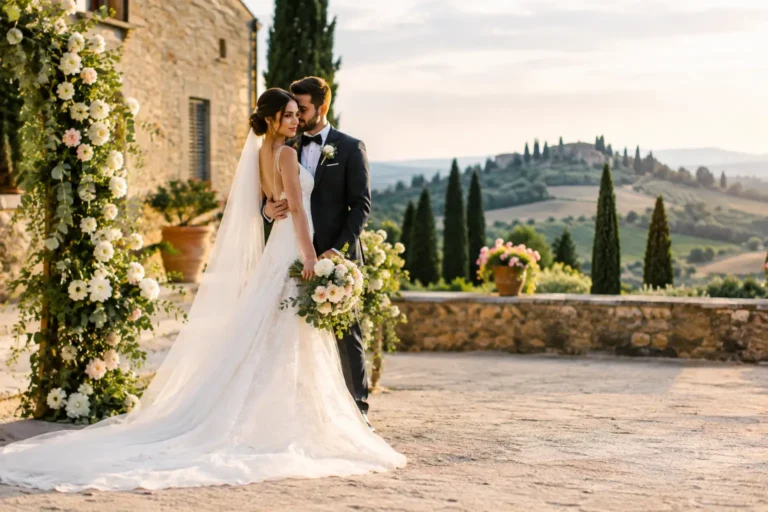
The most memorable luxury weddings rarely feel as though they are trying too hard. They have a sense of ease: guests arrive to soft music and a beautiful first glass of something cold, the ceremony begins without a rush, and every detail feels connected to the couple rather than placed for effect. To plan a relaxed luxury wedding is to protect that feeling from the very first decision.
Luxury, in this context, is not simply an accumulation of expensive things. It is time, comfort, thoughtful hospitality and a clear visual point of view. It is the confidence to edit. When every choice is made in service of a shared atmosphere, a wedding can feel beautifully considered without becoming overly formal or exhausting to host.
Begin with the feeling, not the Pinterest board
Before discussing flowers, table linens or the shape of the cake, decide how you want the day to feel in the body. Perhaps you imagine an afternoon that unfolds slowly beneath olive trees, with candlelight gathering as dinner begins. Perhaps it is a city celebration with silk, sculptural blooms and the intimacy of a candlelit private dining room. The setting may differ, but the emotional direction should be precise.
Choose three to five words that describe the atmosphere you want to create. Luminous, intimate, tactile, celebratory and understated might lead you towards one kind of wedding; playful, cinematic, sun-warmed and abundant towards another. These words become a quiet filter for every decision. If a choice is beautiful but does not belong in your story, it is easier to let it go.
This is also where you can identify what relaxation means to you. For some couples, it means a small guest list and a long dinner. For others, it means an energetic party with an unstructured, late-night finish. A relaxed wedding does not need to be quiet. It simply needs to move at your natural pace.
Plan a relaxed luxury wedding around generous time
The quickest way to make an elegant celebration feel strained is to compress the schedule. A luxurious experience gives people room to arrive, notice their surroundings and be present with one another. It leaves space for a conversation that runs long, a veil adjustment before portraits, or an unexpected moment with a grandparent.
Build the day with fewer hard transitions. If possible, allow guests at least 90 minutes for cocktails after the ceremony, especially at a destination venue where the landscape, architecture or gardens are part of the experience. This is not dead time. It is the point at which hospitality becomes felt: considered drinks, passing canapés, music with warmth and a setting that invites people to settle in.
For the two of you, protect a private pocket of time after the ceremony. Ten quiet minutes in a shaded corridor, a garden or your suite can change the emotional texture of the whole day. It gives you a chance to absorb what has happened before you return to the room as hosts.
There is a trade-off, of course. A looser timeline can mean fewer formal group photographs or a later finish for dinner. Yet guests are far more likely to remember an evening that felt unhurried than one that managed to fit in every possible moment.
Design the schedule around light
Natural light is one of the most flattering and powerful design tools available to you. If photographs matter, avoid placing the ceremony in harsh midday sun simply because it appears convenient on paper. Consider a later ceremony, followed by aperitifs while the light softens, then dinner at dusk.
For an indoor wedding, think about how the room changes from day to evening. A reception space can feel entirely different once lamps, taper candles and table lights take over. The transition is part of the theatre, but it should feel natural rather than staged.
Choose one strong visual language
A relaxed luxury wedding feels cohesive because it has a clear visual language, not because every surface is filled. Start with the venue and honour what is already beautiful about it. An old stone villa calls for a different approach from a modern gallery, a coastal hotel or an English country house.
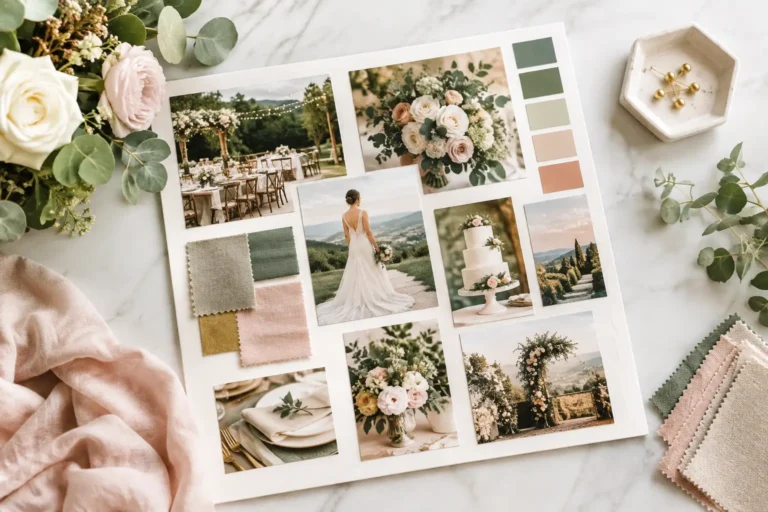
Rather than gathering disconnected saved images, look for recurring details in the images you genuinely love. You may notice warm ivory tones, hand-torn paper, antique glassware, loose garden roses, striped linens or polished chrome. These are clues. Turn them into a small design direction that considers colour, materials, silhouette and mood.
A restrained palette often creates the most lasting impact. This does not mean everything must be neutral. It means choosing one or two colours with intention, then allowing texture to create depth through silk ribbon, linen, ceramic, paper, fruit, glass and flowers. A saturated claret napkin can feel extraordinary against soft stone and cream flowers when it is given space to speak.
The same thinking applies to stationery. Your invitation suite is not merely information. It sets the first tone for the weekend, whether that means blind embossing on thick cotton paper, a delicate watercolour wash or a crisp typographic design. Select pieces with character, then edit the rest.
Spend where guests can feel it
When deciding where to invest, prioritise the elements that create comfort, atmosphere and memory. A beautiful venue, excellent food, generous drinks, thoughtful lighting, accomplished music and florals with movement tend to carry more emotional weight than a long list of decorative additions.
This does not mean every luxury wedding requires an unlimited floral budget. A single sculptural ceremony arrangement, clusters of seasonal flowers on the tables and a candlelit bar can be more evocative than elaborate installations used everywhere. The question is not whether something is grand enough. It is whether it changes the experience of the room.
Food is particularly worth considering through the lens of ease. A formal plated meal can be exquisite, especially in a historic dining room or black-tie setting. But shared platters, family-style courses or an elegant outdoor feast may better suit a celebration built around abundance and conversation. The format should support the way you want guests to interact.
Music deserves the same care. A string quartet during the ceremony, a jazz trio for aperitifs or a live band that understands the room can create a sense of occasion without demanding attention at every second. Plan for contrast: music that welcomes guests in, music that carries dinner, and music that releases the party later.
Let the venue do some of the work
Couples often mistake luxury for transformation. Yet the most convincing celebrations work with a setting’s natural character rather than trying to conceal it. A venue with textured walls, mature gardens, original tilework or beautiful proportions already brings a visual richness that cannot be replicated with hired décor alone.
When viewing venues, ask practical questions alongside aesthetic ones. Where will guests gather if it rains? Is there a graceful route from ceremony to drinks to dinner? Does the dining space need significant lighting after sunset? Can music continue late enough for the kind of party you want? A place can be breathtaking in photographs and still create unnecessary tension if the flow is awkward.
For destination weddings, visit when you can, or ask for recent imagery from the same season and time of day. A sun-drenched terrace in June may be exposed and difficult in August. The best destination design responds to local light, ingredients, flowers and customs rather than importing an idea that belongs somewhere else.
Give your guests clear, quiet care
Relaxation is contagious. Guests feel it when they know where to be, when transport is simple, when there is enough shade, water and seating, and when the hosts are not visibly managing logistics. These are not minor details. They are part of the luxury.
Communicate the essentials clearly before the day, especially for a weekend celebration. Let guests know the dress code, terrain, likely weather and transport arrangements. If the ceremony is outdoors, provide parasols or blankets where appropriate. If your venue is remote, make the journey home uncomplicated. Beautiful hospitality anticipates needs without making a performance of them.
A strong planner or coordinator can be one of the most valuable investments here. Their role is not to make the wedding feel corporate. It is to hold the practical structure so you can be fully inside the experience. If a full-service planner is not within scope, a trusted on-the-day coordinator still offers meaningful freedom.
Leave room for the unplanned
Perfection can make a wedding feel distant. The moments guests hold closest are often the ones no mood board could predict: wind lifting the edge of a veil, a best friend’s unexpected toast, the first song played after dinner, a rain shower that sends everyone laughing beneath the portico.
Create the conditions for beauty, then resist the urge to control every minute. Your celebration does not need to resemble an editorial image at every turn to be an intentional piece of art. It only needs to feel like the two of you, surrounded by the people who have carried you here.
When you choose ease alongside elegance, you give everyone permission to be present. That is where the glow of a truly beautiful wedding tends to remain.