A venue is never simply a backdrop. It determines the pace of the morning, the way guests move from ceremony to supper, and whether your photographs feel polished, intimate, grand or gently undone. When considering a hotel versus private estate, the right choice is less about which is more luxurious and more about the kind of gathering you want your wedding to become.
A storied hotel can offer the ease of considered hospitality, architectural drama and the pleasure of having every part of the celebration gathered under one roof. A private estate offers something different: the feeling of being welcomed into a world that is entirely your own, with time and space to shape it around the people you love. Both can be extraordinary. The difference lies in atmosphere, logistics and the degree of creative freedom you truly need.
Hotel versus private estate: begin with the feeling
Before comparing packages, capacities or minimum spends, consider the emotional memory you hope guests will carry home. Do you imagine a candlelit dinner in a ballroom where service appears exactly when it is needed? Or a long-table feast beneath olive trees, with the late-summer air softening around the final course?
Hotels tend to create an elegant sense of occasion from the moment guests arrive. The lobby, bar, suite corridors and restaurant spaces give the weekend a natural rhythm. There is usually an established visual language too: marble floors, antique mirrors, linen-dressed tables or a terrace with an iconic view. For couples drawn to a city celebration, a coastal weekend with refined service, or a destination wedding where ease matters, that framework can be a gift rather than a limitation.
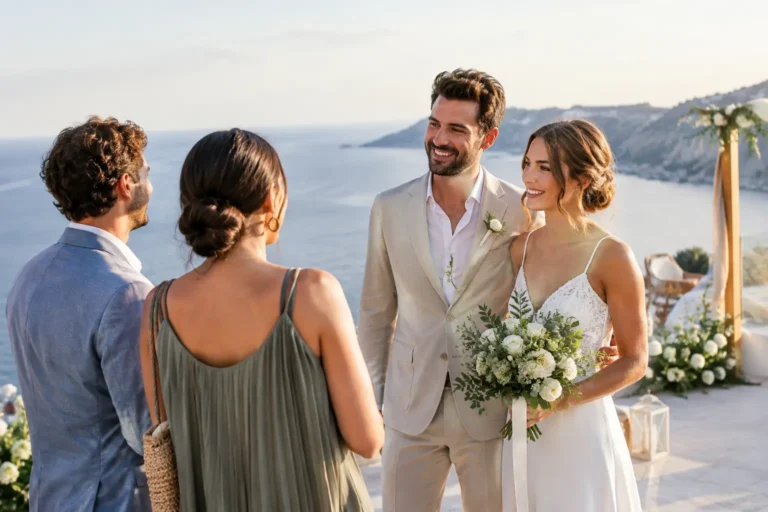
Private estates invite a more immersive, house-party feeling. A château in the French countryside, a villa overlooking the sea, or a country house set among old gardens can make the wedding feel like a brief, beautiful chapter outside ordinary life. The setting often asks for a lighter touch. Rather than filling every surface with décor, you might let weathered stone, climbing jasmine, painted shutters and the landscape lead the design.
Neither atmosphere is inherently more personal. Personality comes from the decisions you make within the space: the welcome drink chosen for its connection to a favourite holiday, the ceremony music, the table linens, the people seated close to you. Still, each venue type makes certain experiences easier to create.
What a hotel does exceptionally well
A hotel is particularly compelling when you value calm structure. Experienced on-site teams understand the choreography of a wedding day: rooms must be turned over, dinner must begin without fuss, and a sudden change in weather needs a graceful solution. That expertise allows you, your family and your wedding planner to be present rather than continually making operational decisions.
Accommodation is another meaningful advantage. When most guests sleep on site, the celebration develops naturally beyond the formal timeline. People meet for breakfast, gather in the bar after the dance floor closes, and share a slower morning before travelling home. This is especially valuable for international guest lists, where travel fatigue and unfamiliar surroundings can make thoughtful hospitality feel deeply considerate.
Hotels are also often more forgiving for winter weddings and larger celebrations. Their indoor spaces, catering facilities and staffing are designed for volume and comfort. You may have a ballroom for dinner, a separate room for dancing and a beautiful suite for private moments, without hiring additional infrastructure.
The trade-off is that a hotel has its own operational identity. You may be working with preferred suppliers, fixed bar packages, specific end times or rules around candles, confetti and external catering. These are not necessarily obstacles, but they should be understood early. The most beautiful hotel wedding designs tend to respond to the property rather than attempt to disguise it. If the dining room has gilt panelling and deep-blue velvet, allow those elements to inform your palette instead of competing with them.
The question to ask a hotel
Ask how many events will take place at the property during your wedding weekend. Exclusivity can change the feeling of a hotel entirely. If it is not possible, ask how the team separates guest arrival, ceremony timing and evening access from other functions. A well-managed shared property can still feel wonderfully private, but clarity is essential.
The private estate advantage: freedom and intimacy
With a private estate, you are often renting time as much as a venue. Many properties allow a two- or three-night stay, which creates room for a welcome supper, unhurried preparations, a wedding day and a farewell brunch. Instead of one concentrated event, the celebration becomes a small world with its own pace.
This setting can be ideal for couples who care deeply about visual cohesion. You might hold the ceremony beneath cypress trees, serve dinner in the courtyard and move indoors for dancing, all while retaining the feeling of one continuous story. The ability to choose your own caterer, florist, furniture hire and lighting team can make an estate feel more expressive and specific to you.
There is an intimacy to private homes that formal venues rarely replicate. Guests might see your dress hanging in a sunlit bedroom, sip aperitifs beside the pool, or linger in a garden after dinner. Those unplanned moments often become the images and memories that feel most alive.
Yet complete freedom requires a practical mind. An estate may need everything brought in: power, toilets, a catering tent, glassware, a dance floor, transport, staff accommodation and weather protection. Some rural properties have narrow access roads, noise restrictions or limited parking. A dreamy outdoor dinner can become challenging if the nearest kitchen is small or the reception area is far from the ceremony site.
This does not mean private estates are difficult by definition. It means the planning team matters. A venue coordinator may oversee the property, but they are not always responsible for the full production. For an estate wedding, an experienced planner is often the person who turns freedom into ease.
The question to ask a private estate
Ask what has to be hired in, and what happens if the weather changes. Request a clear plan for a wet-weather ceremony and dinner that feels as intentional as the outdoor vision. A transparent marquee or covered courtyard can be exquisite, but it should be part of the design from the beginning, not an emergency solution imagined the week before.
Consider your guest experience, not only your own
The hotel versus private estate decision becomes clearer when viewed through your guests’ eyes. A hotel is simple to navigate, generally accessible and reassuring for older relatives or those travelling alone. There is a reception desk to answer questions, lifts, room service and familiar comforts. For a multi-generational gathering, that dependability has real value.
An estate can feel warmer and more relaxed, particularly for a smaller guest count where everyone knows one another. But think honestly about transport. Will guests need shuttles after dinner? Is there reliable taxi availability? Are nearby rooms of a comparable standard available for those not staying on the property? In remote destination settings, small logistical gaps can shape the entire experience.
Guest count should influence the decision too. A 45-person dinner may feel wonderfully atmospheric across the garden of an estate, while a 180-person celebration may benefit from a hotel’s scale, staffing and built-in flow. There are exceptions, of course. The best choice is the one that allows your guest list to feel cared for, rather than squeezed into a setting that photographs beautifully but functions poorly.
Let the design follow the venue’s character
A refined wedding does not need to make a blank canvas of every room. In fact, the most timeless celebrations usually begin by noticing what is already beautiful. At a hotel, that may mean echoing the shape of an Art Deco lamp in your stationery, choosing sculptural florals for a grand staircase, or creating an evening palette that comes alive against warm plaster walls.
At a private estate, work with the season and setting. Fine garden roses and loose linen may suit a country house in June, while taper candles, darker fruit and textured silk create a richer mood for an autumn villa celebration. The goal is not themed décor. It is a sense that every element belongs there.
If a hotel’s existing interiors do not align with your vision, do not assume flowers will solve the problem. Similarly, if an estate is beautiful only in bright sunshine, do not ignore its indoor rooms. Visit at the time of year and, where possible, the time of day you intend to marry. Notice light, sound, scent and the places guests naturally gather. These details shape atmosphere far more than a saved image ever can.
Choose the venue that protects what matters
Choose a hotel when you want polished service, contained logistics and a celebration that feels elegant from check-in to farewell breakfast. Choose a private estate when you want privacy, creative authorship and the unhurried intimacy of a shared home, with room in the budget and planning process for production.
The most luminous choice is the one that gives you space to be fully present. Picture the quiet moment after the ceremony, when you look across the room or garden and see every person who matters to you. Select the setting that makes that moment feel natural, generous and entirely your own.