The question of lab grown versus natural diamonds often arrives midway through engagement-ring planning, just as a collection of saved images begins to reveal a pattern: soft candlelight, an antique-inspired setting, a luminous stone that feels quietly extraordinary. Yet this decision is about more than choosing what catches the light. It is about provenance, priorities and the story you would like your ring to carry through ordinary mornings, far-flung holidays and the years ahead.
Both options can be beautiful. Both can be real diamonds. The more useful question is not which is universally better, but which choice feels most aligned with the way you want to invest in this meaningful object.
Lab grown versus natural diamonds: the essential difference
A natural diamond formed deep within the earth over billions of years, brought closer to the surface through geological activity, then cut and polished for jewellery. Its journey is ancient, improbable and, for many couples, profoundly romantic. There is a certain poetry in wearing a stone shaped by time itself.
A lab grown diamond is created by replicating the conditions in which diamonds form. Two principal methods are used: high-pressure, high-temperature growth and chemical vapour deposition. The resulting stone has the same core chemical composition as a mined diamond – crystalline carbon – and the same brilliance, hardness and fire when it is well cut. It is not a simulant such as cubic zirconia or moissanite.
The distinction lies in origin rather than appearance. To the unaided eye, a high-quality lab grown diamond and a high-quality natural diamond can look identical. Specialist equipment can identify their growth patterns, which is why independent grading remains valuable for either choice.
Beauty is shaped by the cut, not the story alone
It is easy to become absorbed by carat weight, particularly when a lab grown diamond may make a larger stone accessible within the same budget. But size is only one part of the visual composition. A beautifully cut 1.5-carat diamond can feel far more luminous than a poorly cut two-carat stone, whatever its origin.
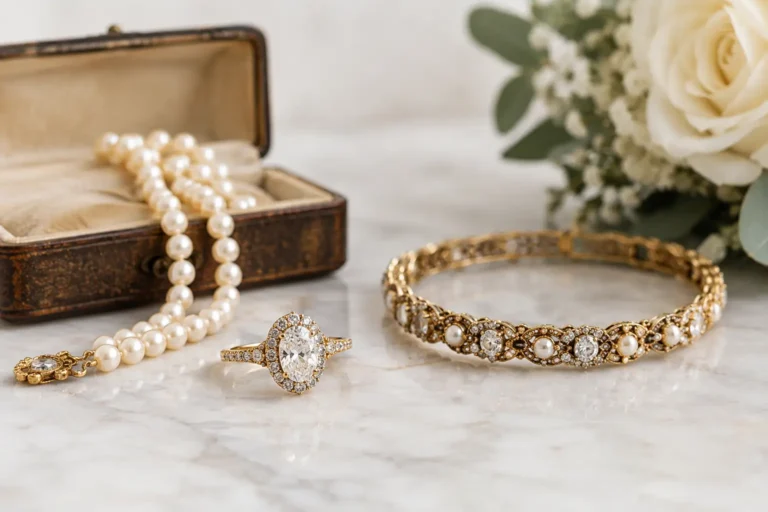
For a ring with editorial clarity, begin with proportion. An elongated oval can create a graceful, lengthening line on the hand; an emerald cut brings calm, architectural flashes of light; an old-cut-inspired cushion offers softness and a sense of lived-in romance. The setting changes the mood again. Fine claws may make a stone appear to float, while a warm yellow-gold bezel feels more sculptural and intimate.
When comparing stones, prioritise cut quality and the way the diamond performs in different light. Ask to see it in daylight as well as under showroom lighting. Notice whether it has lively brightness, crisp contrast and a character that suits the metal and setting you have chosen. A diamond should feel like part of a whole composition, not a number selected in isolation.
Colour, clarity and the quiet art of restraint
Lab grown diamonds are often available in higher colour and clarity grades at a lower price point. This can be appealing if you love a bright, icy-white look or want to devote more of your budget to a larger central stone.
Still, perfection on paper is not always the most expressive choice. A near-colourless natural diamond in yellow gold may look wonderfully luminous, while a stone with a small inclusion outside the visible centre may be indistinguishable from a flawless one once set. The most considered decision is usually an eye-clean stone with a beautiful cut, rather than the highest possible grade in every category.
If you are drawn to salt-and-pepper inclusions, champagne tones or the gentle irregularity of antique cuts, remember that the standard four Cs cannot fully describe their charm. These diamonds are chosen for personality and atmosphere, not clinical uniformity.
Price, value and what you are really buying
The financial difference is usually the clearest practical consideration. Lab grown diamonds generally cost considerably less than natural diamonds of comparable size and grading. For some couples, that means choosing the scale they have always envisioned. For others, it frees funds for an exceptional setting, handcrafted wedding bands, a smaller guest list with more generous hospitality, or a memorable honeymoon.
Natural diamonds cost more partly because they are scarce and because their supply chain involves extraction, sorting and distribution. Their established market also means they tend to hold resale value more reliably than lab grown diamonds, although resale is never guaranteed and should not be treated as an investment plan. Retail prices, resale prices and insurance valuations are not the same thing.
Lab grown diamond prices have declined as production has expanded, so their future resale value is particularly uncertain. That does not make a lab grown stone a lesser emotional choice. It simply means it is best purchased for the joy of wearing it rather than with an expectation of recovering its original cost later.
A useful way to frame the decision is this: do you want to direct more of your budget towards visual presence today, or do you place particular value on rarity, geological history and a more established secondary market? Neither answer is frivolous. Both reflect a thoughtful set of priorities.
The ethics and environmental question needs nuance
Many couples begin this comparison with sustainability in mind, and rightly so. Mining can bring serious environmental and social concerns, including land disturbance, water use and, in some regions, poor labour practices. A natural diamond should therefore come with meaningful information about its sourcing, not only a polished sales narrative.
Lab grown diamonds avoid mining, but they are not automatically impact-free. Growing a diamond requires significant energy, and the environmental picture depends heavily on where and how that electricity is produced. Claims such as “eco-friendly” or “sustainable” deserve a closer look. Ask for specific information on energy sources, manufacturing practices and any independently verified environmental reporting.
For natural diamonds, look beyond broad assurances. Seek clear traceability where possible, and ask the jeweller how it approaches responsible sourcing. Certification schemes can be one useful part of the picture, but they are not a complete answer to every ethical question.
There is also an approach that sits outside the usual debate: an antique or reclaimed diamond. Reusing an existing stone does not require new mining or new laboratory production, and it brings a patina of history that cannot be manufactured. A family stone can be reset into a ring that feels wholly your own; a vintage diamond can lend a modern design a quiet sense of continuity.
How each choice shapes the feeling of a ring
A natural diamond often appeals to couples who are moved by ritual, rarity and the physical connection to the earth. It can feel especially fitting for a ring designed to become an heirloom, whether the setting is a classic solitaire or a more poetic, vintage-inspired piece. The appeal is not simply status. It is the knowledge that no future production cycle can recreate that exact geological journey.
A lab grown diamond can be equally resonant for couples who value innovation, considered spending and the freedom to make a bold visual choice. It may allow room for a generous pear shape, an elegant three-stone composition or a diamond-accented band without stretching the budget beyond comfort. There is romance, too, in choosing a stone that reflects a modern love story: intentional, informed and unconstrained by old expectations.
Try not to let external opinions make the decision feel like a moral test. A ring is not more meaningful because it is mined, and it is not less meaningful because it was grown in a laboratory. Its meaning gathers in the proposal, the promises you make and every time your hand reaches for your partner’s across a table.
Questions to ask before you choose
Before making a final decision, ask the jeweller whether the diamond comes with an independent grading report and whether its laboratory origin is clearly disclosed. View more than one stone if possible, because two diamonds with similar certificates can still look different in person.
Discuss the cut, setting and proportions together rather than treating them as separate purchases. An experienced jeweller should be able to explain how a particular stone will sit, how it will wear, and whether its shape complements your lifestyle. If you work with your hands, travel frequently or prefer a ring that feels low-fuss, a lower profile or protective setting may matter as much as the diamond itself.
Finally, give yourself permission to pause. The right ring is rarely the one that wins an abstract debate. It is the one that makes you look down at your hand and recognise something unmistakably yours: luminous, considered and ready to hold a lifetime of memories.