The cake-cutting moment is often one of the few pauses in a wedding day when everyone turns towards the same small, beautiful scene. A carefully chosen cake can feel less like a dessert and more like an intentional piece of art: a reflection of the season, the setting, and the two people celebrating. This guide to choosing wedding cake begins there, with the feeling you want the room to hold when it arrives.
Rather than beginning with a gallery of trends, begin with the atmosphere of your celebration. A sculptural white-on-white design may be perfect for a candlelit city dinner, while tiers of soft buttercream and orchard fruit belong naturally at a summer garden gathering. The most memorable cakes do not simply look impressive in isolation. They feel as though they have always belonged at that table.
Begin with the feeling, not the flavour list
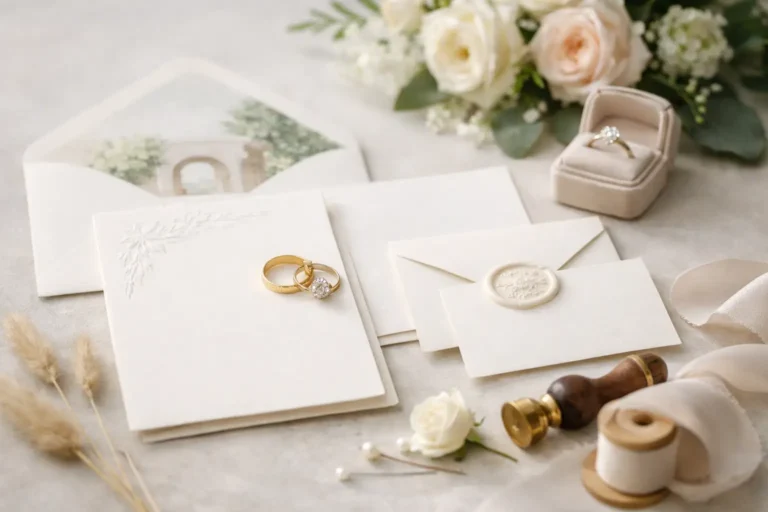
Before speaking to a cake designer, gather the visual cues that define your day. Consider your stationery, floral palette, linen texture, venue architecture and the quality of light at your reception. You need not match every detail exactly, but the cake should speak the same visual language.
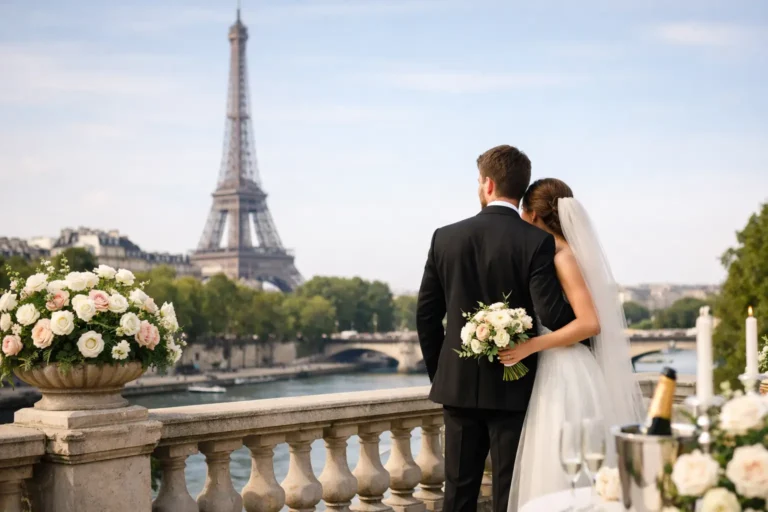
For a celebration shaped by old-world romance, perhaps in a French château or an English country house, an elegantly piped buttercream cake with gentle movement may feel more appropriate than sharp-edged fondant. For a contemporary gallery wedding, clean geometry, tonal sugar work or an architectural silhouette can make a quietly striking statement. The aim is cohesion, not decoration for its own sake.
I often encourage couples to choose three words for their cake: perhaps luminous, organic and refined, or playful, abundant and sun-warmed. These words give your designer a more useful creative direction than a folder full of unrelated images. They also make decisions easier when you are choosing between finishes, flowers and flavours.
A guide to choosing wedding cake size and scale
Scale is where beauty meets practicality. A cake can be too small for a grand room, even if it serves every guest, and it can feel overly formal at an intimate lunch. Think about where it will be displayed, whether it has its own table, and how it will appear in photographs beside the two of you.
Your cake designer will calculate portions based on your guest count, but there is no rule that says every serving must come from the display cake. Many couples choose a smaller statement cake and order matching kitchen cakes to be cut and served behind the scenes. This is an especially graceful option when you would like a tall, delicate design without commissioning more elaborate decorated tiers than the room requires.
A multi-tiered cake creates presence, while a single tier can be just as considered when styled generously with fruit, flowers or a beautifully proportioned stand. At a small wedding, one sculptural tier placed among low arrangements can look far more intentional than a traditional large cake with no connection to the tablescape.
Ask your venue about cake-table dimensions, refrigeration and the route from kitchen to reception. In a historic property or destination venue, narrow staircases, warm rooms and limited preparation space can shape what is possible. These details are unglamorous, but they protect the finished design.
Choose a finish that suits the setting
There is a particular beauty in cakes that reveal the hand of their maker. Textured buttercream catches candlelight softly. Fine sugar flowers bring a sense of permanence and intricacy. Fresh fruit offers colour and looseness, while a smooth fondant finish can provide an immaculate canvas for modern details.
Each approach has a trade-off. Buttercream has a romantic softness, but may be less forgiving in high heat. Fondant travels well and holds sharper forms, though it is not every guest’s favourite to eat. Fresh flowers should be selected and prepared with care, as not all blooms are food-safe. Sugar flowers can be extraordinarily lifelike, yet they add both cost and delicacy.
If you are marrying abroad, ask early about climate. A cake that sits beautifully in a cool London dining room may behave very differently during an outdoor ceremony in Provence or a terrace reception on the Amalfi Coast. Your designer can recommend stable fillings, finishes and a delivery schedule that respects the weather without compromising the look.
Let flavour be generous and personal
A beautiful cake is still dessert, and guests remember a good slice. Tasting is the moment to move beyond what looks lovely on a moodboard and choose something that feels like you.
Classic vanilla bean, lemon and raspberry, and rich chocolate remain favourites because they please a wide table. But a wedding cake can hold more personal notes: pistachio with orange blossom, pear and brown butter, coconut with passionfruit, or olive oil sponge with lemon curd. A flavour can echo the place where you met, a favourite holiday, or the season in which you are marrying without becoming overly themed.
If you are serving several tiers, consider two or three flavours rather than one. This gives guests choice and lets you include something more distinctive alongside a familiar option. It is wise, however, to avoid making every tier unusual. One crowd-pleasing flavour ensures even the least adventurous guest is happy.
Pay attention to texture as much as taste. A light sponge with a silkier filling may be welcome after a long, multi-course dinner, whereas a darker, richer cake can be wonderful for an autumn celebration with coffee and digestifs. Ask to taste the exact combinations proposed, including fillings and coverings, rather than sponge samples alone.
Treat decoration as part of the wider tablescape
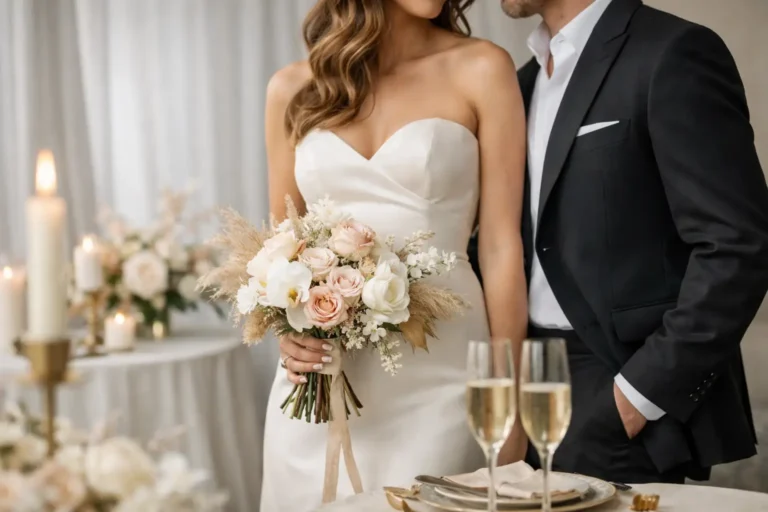
The most successful cake styling is rarely an afterthought. Share your florist’s approach with your cake designer, including flower varieties, colours and whether arrangements will feel loose and meadow-like or structured and sculptural. Repeating one or two floral notes is usually enough. A cake covered in every bloom from the room can lose its own sense of restraint.
Fruit, herbs and edible petals can be equally evocative. Figs, grapes and blackberries feel abundant for late summer; citrus creates a Mediterranean brightness; delicate pressed flowers can add a quiet, painterly detail. These elements work best when they are in season and appropriate to the venue rather than chosen simply because they are popular online.
Do not overlook the cake stand and table. A vintage silver stand, a stone plinth, a draped linen cloth or a simple wooden pedestal each changes the mood. Leave room around the cake so its silhouette can be seen, then allow candles or a few low floral moments to make it feel integrated with the celebration.
Understand where the investment goes
Wedding cakes are priced not only by portion count, but by craft. Hand-piped detail, sugar flowers, bespoke colour matching, complex structures, delivery distance and on-site assembly all require time. A smaller cake with intricate artistry may therefore cost more than a larger, simply finished design.
Be candid about your budget at the beginning. A thoughtful designer can suggest where to place the emphasis, whether that means investing in a single showstopping front tier, choosing seasonal flowers over hand-made sugar blooms, or using kitchen cakes for additional servings. It is not a compromise to simplify with intention. Often, restraint is what allows the most beautiful detail to be noticed.
Confirm what is included in the quotation: tasting, stand hire, delivery, set-up, cutting guidance and any return collection. If your venue charges a cake-cutting fee, include this in the wider dessert budget. These practical questions allow you to enjoy the creative process without last-minute surprises.
Give your designer room to create
Bring references, certainly, but seek a designer for their point of view rather than asking for an exact replica of another couple’s cake. The photographs you save were created for a different season, setting and story. Use them to explain what you respond to: the softness of the piping, the asymmetry of the flowers, the clean line of the tiers.
Then trust the collaboration. A designer who understands your venue, floral direction and menu can create something more personal than a copied image ever could. The final cake may be the first thing guests see in the reception room, but its real value is in the small pleasure of sharing it. Choose the one that makes you both want to take that first slice, pause for a photograph, and savour the moment together.