
A silk ribbon catching the late-afternoon light, the quiet weight of hand-torn menus beside a sculptural flower, the way candlelight changes a room after dinner: these are the details that make editorial wedding styling feel less like decoration and more like memory. It is not about recreating an image from a magazine. It is about shaping a celebration with enough visual intention that every photograph, and more importantly every moment, feels unmistakably yours.
For couples drawn to a refined, natural and timeless aesthetic, the appeal is clear. Editorial styling brings a sense of narrative to the day. Yet its greatest strength is not perfection. It is its ability to make a wedding feel considered without becoming overly controlled.
What Editorial Wedding Styling Really Means
Editorial wedding styling takes its cue from fashion editorials, art direction and beautiful print publications. It considers the full composition: setting, light, proportion, colour, materials, stationery, florals, fashion and the pace of the celebration. Rather than treating each choice as a separate decision, it asks how every element speaks to the next.
A wedding in a Provençal stone courtyard, for example, might pair parchment menus, soft butter-toned linens, garden roses and antique glassware. The result is not simply “French”. It is a particular atmosphere: sun-warmed, intimate and quietly elegant. In a London townhouse, the same palette could feel entirely different, perhaps sharpened with tailored silhouettes, darker fruit and polished silver.
This is why editorial does not mean a fixed look. It can be romantic and abundant, restrained and architectural, colourful and playful, or softly minimal. The common thread is clarity. There is a point of view behind the choices.
Begin With Feeling, Not a Pinterest Board
The most compelling celebrations are rarely built from a list of trends. Before considering tablecloths or ceremony backdrops, decide how you want the day to feel. Think in scenes rather than objects. Do you picture guests arriving through a scented garden as music drifts from the terrace? A candlelit supper that becomes more animated as the evening unfolds? A coastal lunch with wind-blown florals and a table laid close to the sea?
Choose three to five words that describe this feeling. They might be luminous, intimate, textural, celebratory and relaxed. These words become a useful filter when decision fatigue begins. If a choice is beautiful but does not support the atmosphere, you can let it go.
I also encourage couples to find one personal starting point. It may be the city where you met, a family home, a favourite painting, the silk scarf your grandmother wore, or a holiday spent in Puglia. This reference does not need to become literal. Its role is to lend the design emotional depth, so the wedding avoids feeling like a borrowed set.
Build a Visual Language, Not a Collection of Ideas
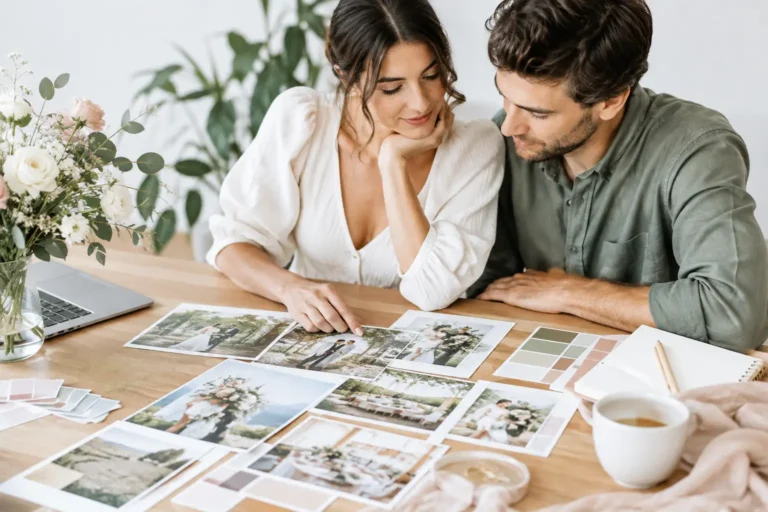
Inspiration is useful until every saved image belongs to a different wedding. The answer is not to stop collecting, but to edit with purpose. Look for recurring qualities across the images you love: perhaps diffuse light, gently faded colours, long tables, expressive flowers or old-world paper textures.
Then create a visual language around those qualities. Your palette might include chalk, oyster, apricot and oxblood, but colour alone will not hold the design together. Consider temperature, too. Warm ivory behaves differently from crisp white; a blue-grey linen can make blush flowers appear cooler and more formal.
Texture often provides the cohesion couples are searching for. Pairing raw silk with polished glass, handmade paper with fine porcelain, or gathered linen with clean-lined chairs creates contrast and depth. A room styled entirely in one finish can look flat, even when every item is expensive.
Let the Venue Lead the Composition
A strong venue is not a blank canvas. Its architecture, landscape and existing character should inform the styling. Trying to disguise a rustic barn as a Parisian salon, or covering a grand historic dining room in excessive props, usually costs more and feels less convincing than working with what is already there.
Study the venue at the time your celebration will take place. Notice the direction of the light, the colour of the walls, the scale of the doorways and where guests naturally gather. A south-facing terrace may ask for lighter, softer materials to avoid visual glare. A dark-panelled room may benefit from taper candles, reflective glass and florals with movement rather than a heavy mass of foliage.
Scale is especially important. Low arrangements can encourage conversation across a wide table, while taller pieces can bring drama to a lofty room. Neither is inherently more editorial. The question is whether the proportions honour the setting and the guest experience.
Design the Guest Journey
Editorial wedding styling should unfold gradually. Consider the first view guests encounter, then the small discoveries that follow: an escort display with a personal note, a bar dressed as part of the room rather than an afterthought, a lounge corner that invites people to linger.
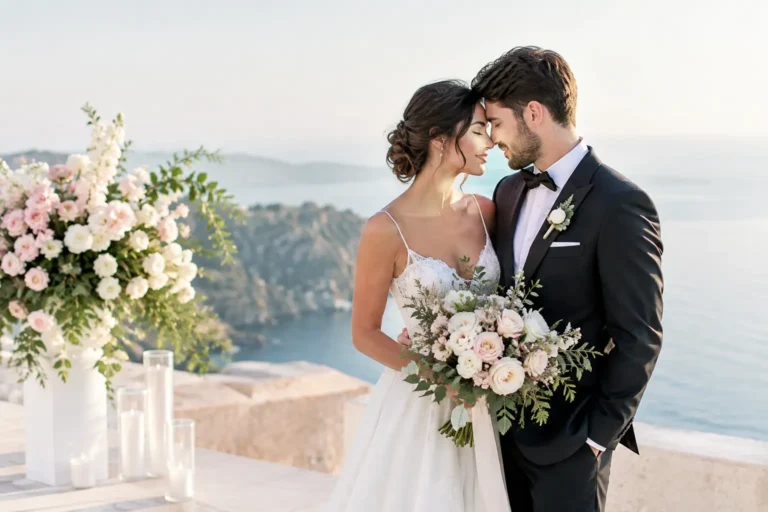
The ceremony deserves particular care because it carries the most emotional weight. Instead of framing it as a stage, consider how it sits within the landscape or architecture. A single floral gesture placed against an exceptional view can be more moving than a large installation that competes with it.
At dinner, leave room for the table to breathe. Menus, place cards, flowers, candles and fruit can create a rich composition, but guests still need sightlines and somewhere to put their glasses. Luxury is often felt in this restraint: beautiful objects, thoughtfully spaced.
Make Light Part of the Design
Light is the material no styling budget can replace. It affects the photographs, the mood and the way colour reads throughout the day. When planning with your photographer and venue, consider when the ceremony will take place, where portraits can be made, and how the dinner space changes after sunset.
Natural light suits the luminous, quietly romantic imagery many couples love, but it is not always predictable. A wet-weather plan should be designed with the same care as the original concept. Covered terraces, window-lit rooms and clear marquees can still feel graceful when the materials, lighting and furniture have been considered in advance.
For evening, candlelight is transformative, although it depends on venue rules and safety requirements. Where open flames are not possible, high-quality warm lighting can create a similar softness. Avoid harsh overhead illumination where you can. The goal is not a dim room in which guests cannot see their meal, but layers of glow: lamps, tapers, pin lights and a little shadow.
Where to Spend, Where to Edit
Editorial impact does not require every surface to be filled. In fact, selective investment usually produces a more polished result. Spend where guests will look closely or spend time: ceremony design, tablescape details, lighting, stationery and one or two statement moments. These elements are repeatedly seen, photographed and remembered.
Be thoughtful about what is ephemeral. An elaborate installation can be worth it if it transforms a plain room or creates a meaningful focal point. If your venue already has extraordinary gardens, frescoes or sea views, the better investment may be exceptional flowers on the tables and beautiful lighting after dark.
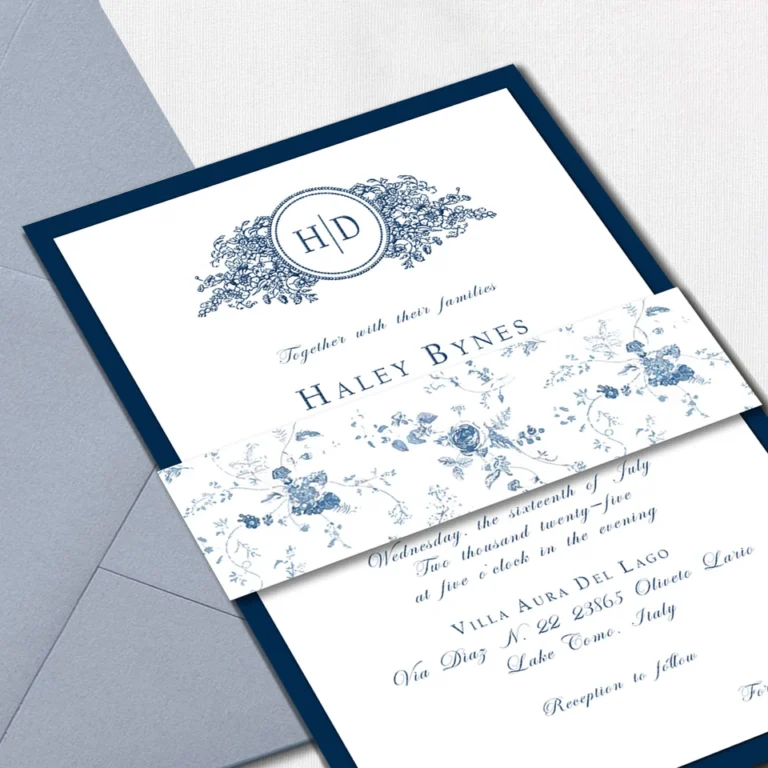
The same principle applies to stationery. A considered invitation suite establishes the tone before guests arrive, but it need not be overloaded. Beautiful stock, elegant typography and one tactile detail, such as a deckled edge or silk ribbon, can say more than layers of embellishment.
Keep the Celebration Human
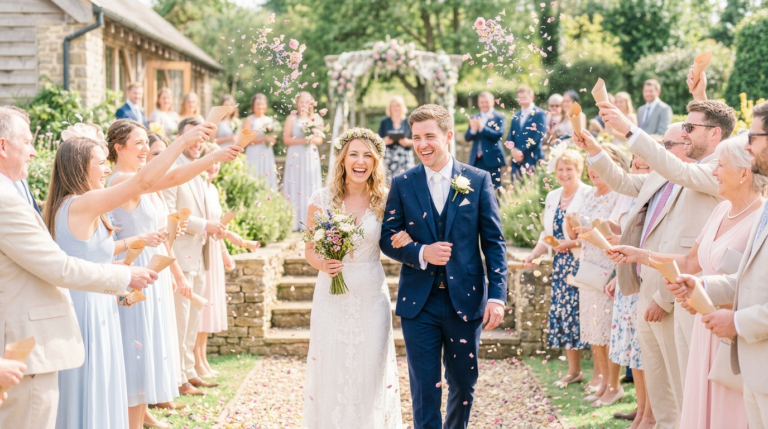
There is a delicate balance in editorial wedding styling. A perfectly composed table is lovely, but a wedding should never feel so precious that guests are afraid to settle into it. Leave space for laughter, dancing, imperfect weather and the unscripted gestures that become the heart of the photographs.
This may mean choosing flowers that move naturally rather than rigidly arranging every stem. It may mean setting a long supper table where friends can lean together, or letting the cake be served with a little ceremony rather than hidden away. The design should support connection, not demand attention from it.
If you are working with a planner, florist or stylist, share not only your saved images but your story, priorities and non-negotiables. The best creative teams translate references into something original for your setting. They will also tell you when an idea is impractical, out of scale or likely to distract from the atmosphere you are trying to create.
A beautifully styled wedding is not one where every detail announces itself. It is one where the light feels right, the room holds people gently, and the objects around you seem to belong to the story. Let your choices be edited, personal and a little unexpected. That is where effortless romance begins.
5 Comments