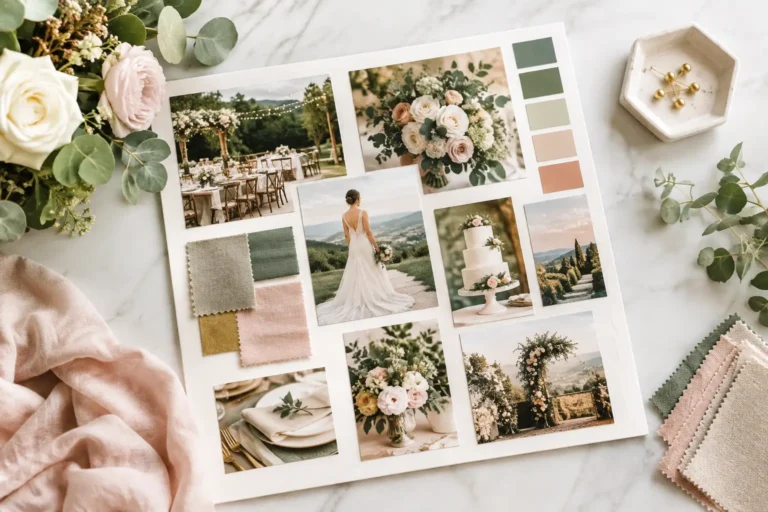
The most beautiful wedding photographs rarely come from a day that is rushed. They come from unhurried embraces, a little room for the unexpected, and enough time to let the light do its work. This guide to wedding photography timelines is designed to help you protect those moments, while ensuring your celebration still feels like yours rather than a production schedule.
A considered timeline is not about directing every breath of the day. It is about creating a gentle rhythm: quiet anticipation in the morning, time for the people you love, portraits with a sense of place, and an evening that unfolds without anyone watching the clock.
Why Your Photography Timeline Shapes the Whole Day
Photography is woven through almost every meaningful part of a wedding. The time you allow for it affects when your florist can finish styling, whether your ceremony begins in flattering light, how long guests spend waiting for dinner, and how present you feel as the day gathers pace.
For a refined, atmosphere-led celebration, I always think of the timeline as an invisible design tool. It gives the day spaciousness. It allows the texture of silk, old stone, candlelight, handwritten vows and a beautifully set table to be recorded as part of one coherent story, rather than as a series of hurried tasks.
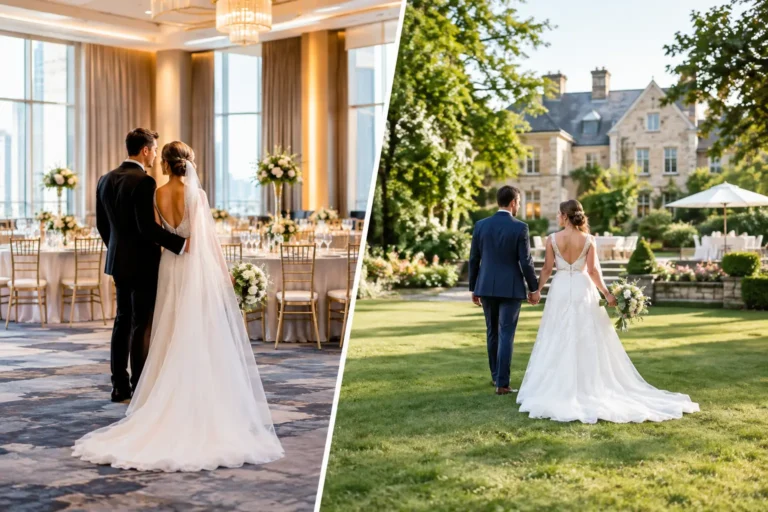
The right structure depends on your season, venue, guest count, cultural traditions and priorities. A winter wedding in the Cotswolds needs a very different approach from a late-summer celebration on the Amalfi Coast. Still, one principle holds true: build around the light first, then place everything else with intention.
A Guide to Wedding Photography Timelines: Begin With Light
Before choosing a ceremony time, ask your photographer when the sun sets and what the light will be like at your venue. In Britain, particularly from October through March, natural light can disappear early. A 3 pm ceremony may feel wonderfully intimate in a candlelit setting, but it leaves little daylight for family photographs and newlywed portraits afterwards.
If luminous outdoor imagery matters to you, aim to finish the ceremony at least 90 minutes before sunset. This gives space for confetti, greetings, family groupings and a short portrait session without asking you to miss the first part of your drinks reception.
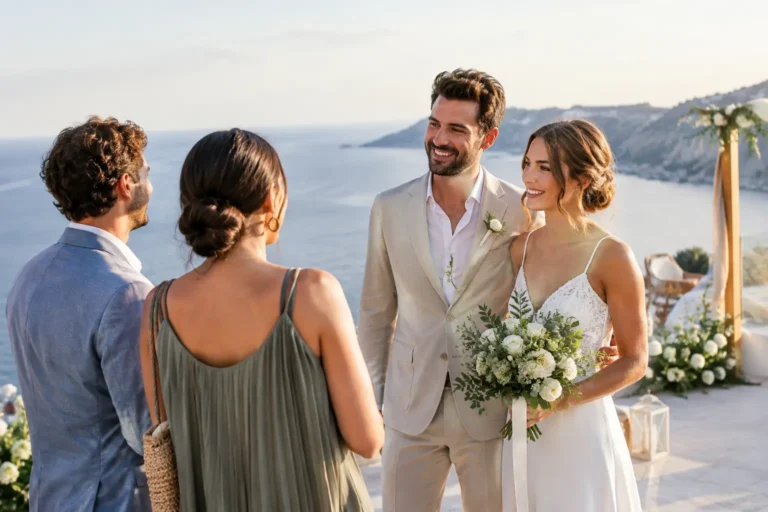
For summer weddings, the challenge is often the opposite. Midday sunshine can be bright and high, especially in open gardens, coastal venues and southern European destinations. Consider a later ceremony, perhaps from 4 pm onwards, for softer light and a more relaxed transition into aperitifs and dinner. Your photographer may also suggest stepping outside for ten quiet minutes around sunset. This is often where the most romantic, natural portraits happen.
Do not be afraid to make choices that favour atmosphere over convention. If you dream of a ceremony beneath trees or dinner outdoors, the light and temperature should carry as much weight as tradition when shaping the day.
Allow More Time Than You Think You Need
A timeline can look generous on paper and still become tight once the day begins. Someone needs a cufflink repaired. A bridesmaid is finishing a speech. Your grandmother wants a photograph with you. These are not inconveniences. They are part of the human texture of a wedding, and the schedule should be able to hold them.
For getting ready, allow at least three hours of photography coverage if you would like meaningful images of both partners preparing. This period is not only for beauty portraits. It is where the smaller visual details live: the invitation suite, heirloom jewellery, perfume, flowers arriving, the fastening of a dress, a parent seeing you ready for the first time.
Ask your florist, stationer and stylist to have key details ready in one place before your photographer arrives. This may include your paper goods, both rings, shoes, veil, fragrance, vow books and any sentimental objects. It saves searching later and lets the photographer create still-life imagery with the calm, editorial quality you may have saved for months.
Family photographs are another area where a little organisation pays off. Keep the group list concise, ideally no more than ten combinations, and nominate a family member who knows everyone to gather people. Twenty minutes can be enough for a focused list; forty minutes can vanish quickly if relatives wander towards the bar or become absorbed in conversation.
Choose a First Look Only If It Serves You
A first look can make a wedding day feel remarkably spacious. Seeing one another before the ceremony allows you to take many portraits and family photographs earlier, leaving the drinks reception more open for champagne, conversation and the pleasure of being with your guests.
Yet it is not the right choice for every couple. For some, the emotional weight of seeing each other at the ceremony is non-negotiable. If that is you, honour it. Your timeline simply needs to protect a portrait window afterwards, and perhaps a second, brief session near sunset.
There is also a middle path. You might exchange letters without seeing each other, hold hands around a doorway, or arrange a private moment just after the ceremony before joining guests. These choices retain anticipation while giving you a pause together before the social energy of the reception begins.
Build the Reception Around Moments, Not Just Meals
The shift from ceremony to dinner is where a thoughtful timeline becomes especially valuable. Guests are happiest when they have a drink, something delicious to eat and a sense that the evening is moving forward. Couples are happiest when they are not absent from their own reception for an hour of photographs.
A well-planned drinks reception of 90 minutes to two hours usually offers enough room for confetti, group photographs, a short portrait session and genuine mingling. If your venue is expansive, allow extra time for walking between locations. A château, country estate or cliffside villa may be visually extraordinary, but it can take longer than expected to move through.
Think carefully about speeches, too. Speeches before dinner create a relaxed, celebratory feeling and keep the meal flowing uninterrupted. Speeches after the main course may suit a more formal dinner, but can delay the evening party if they run long. There is no universal answer. The best choice is the one that matches the energy you want in the room.
If you are planning a room reveal, private dinner portrait session, outfit change or cake cutting in a separate space, tell your photographer and planner early. These moments need a place in the sequence, not a hopeful gap that disappears on the day.
A Sample Wedding Photography Timeline
For a summer wedding with a 4 pm ceremony and sunset around 8.30 pm, this rhythm offers a graceful starting point:
- 12.30 pm: Photographer arrives for details, preparation and atmosphere.
- 2.45 pm: Final getting-ready portraits and departure for the ceremony.
- 4 pm: Ceremony, followed by confetti and guest embraces.
- 4.45 pm: Family photographs and newlywed portraits while guests enjoy aperitifs.
- 6 pm: Couple joins the drinks reception, followed by a short sunset portrait session at 8 pm.
- 6.45 pm: Guests are called to dinner, with speeches, cake cutting and dancing to follow.
Treat this as a framework rather than a rulebook. A church ceremony with travel between venues will require more margin. A micro wedding may move more fluidly. A destination celebration might include a long, languid aperitivo that deserves protecting rather than compressing.
Give Yourselves a Private Pause
One of the most quietly luxurious decisions you can make is to schedule ten minutes alone together. It may be directly after the ceremony, before entering dinner, or during a sunset walk with your photographer at a respectful distance. This is not simply a photographic opportunity, although the images will often be beautiful.
It is a chance to notice what you have created. To hear the music from another room, to take each other’s hand, and to let the day become a memory while you are still living it. The finest wedding timeline leaves room for precisely that kind of presence.
When you share your plans with your photographer, planner and venue, be clear about what matters most: the people, the portraits, the party, the landscape, the candlelit table, or the freedom to linger. A well-shaped day does not ask you to choose between beauty and feeling. It makes room for both.