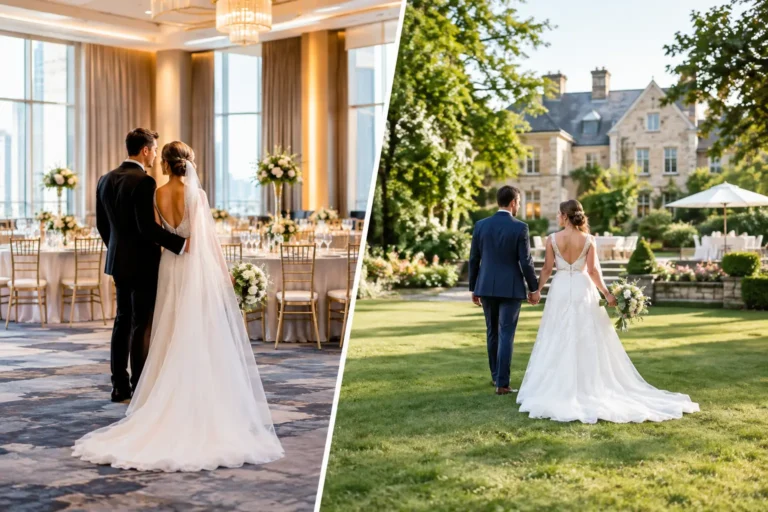
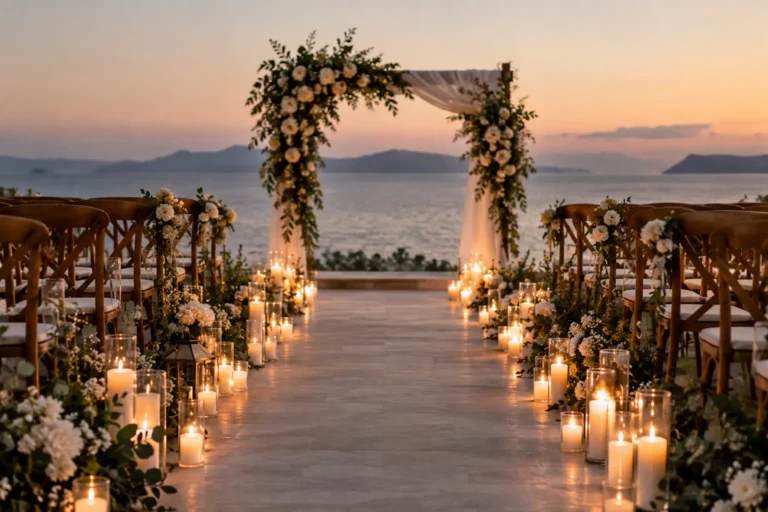
A Thursday ceremony in a candlelit orangery, followed by a long supper beneath softly gathered linen, can feel wonderfully intimate. Yet weekday wedding etiquette asks couples to hold two truths at once: the date may make a meaningful celebration more attainable, but it also asks more of the people invited. The most elegant approach is never to apologise for a weekday wedding. It is to plan it with clarity, generosity and genuine consideration for the lives your guests will be rearranging to be there.
A weekday can offer a quieter, more personal rhythm than a traditional Saturday. Beloved venues may be available, suppliers can have greater flexibility, and a smaller guest list often feels entirely natural rather than constrained. But beauty is only one part of hospitality. Thoughtful timing, honest invitations and a well-paced experience will ensure the day feels intentional, not inconvenient.
Weekday wedding etiquette begins with candour
The central courtesy is simple: give guests as much notice as possible. For a local celebration, aim to send save-the-dates nine to 12 months in advance. For a destination wedding, or one involving a bank holiday period, 12 to 18 months is kinder. This gives guests time to request annual leave, arrange childcare and make travel plans before prices rise.
Your invitation should state the date, location and ceremony time with complete precision. Guests should not have to infer whether a Wednesday event begins at midday or after work. If the celebration is intimate and you know a handful of guests will face particular challenges, such as school-age children, demanding work schedules or a long journey, a personal conversation before the invitations are posted can feel especially gracious.
There is no need to explain your budget, venue availability or reasoning on the invitation itself. A weekday date does not require a defence. If someone asks, a warm and uncomplicated answer is enough: the setting, season and shape of the day felt right for you. The point is to be transparent, not apologetic.
Equally, make peace with the possibility that some loved ones cannot attend. A decline to a weekday wedding is not a verdict on your friendship. For many people, annual leave is limited, childcare is complex, or work commitments genuinely cannot move. Receive regrets with warmth and without asking guests to justify themselves. The atmosphere of a wedding begins long before the ceremony, in the way people are made to feel when they respond.
Be thoughtful about the guest list
A weekday date naturally creates a little more selectivity, and that can be a gift. Rather than inviting broadly in the hope that everyone can manage it, consider who will be present in the fullest sense. A guest list shaped around your closest relationships often produces the relaxed, emotionally generous room couples hope for.
This does not mean colleagues, distant relatives or wider friendship circles are less valued. It simply means a weekday event benefits from a clear sense of scale. If a larger celebration matters deeply to you, a Friday evening may be the gentlest compromise. Guests can often travel after work, while you still gain some of the venue flexibility associated with weekdays.
Choosing a schedule that respects the working week
The ceremony time defines how demanding the day feels. A midday Tuesday ceremony can be perfectly lovely for a small, local gathering, particularly if many guests are retired, work flexibly or are already travelling for a destination wedding. For a broader group, however, it may require a full day of leave plus an overnight stay.
An early evening ceremony is often the most considerate option for a weekday wedding. A 5.30 or 6 pm start allows nearby guests to work a shortened day or travel afterwards, while still leaving room for a beautiful ceremony, drinks reception and dinner. In winter, candlelight, layered florals and an intimate dining room can make this timing feel particularly cinematic. In summer, it may call for a later meal and a gentler transition from golden hour into evening.
Think carefully about the finish time, too. A weekday celebration does not need to end early by rule, but a formal evening that runs past midnight can be difficult for guests facing school runs, meetings or early trains. Consider a graceful arc: a ceremony, aperitifs, dinner, speeches and a lively but concentrated period of dancing. The final song can arrive while the room still feels full of energy rather than when guests are anxiously checking the time.
If you are planning a morning ceremony followed by lunch, make the intention clear. A sunlit luncheon can be one of the most elegant formats for a weekday – lighter, convivial and naturally finite. It works best when guests understand that the celebration is designed to conclude mid-afternoon, rather than quietly stretching into an all-day commitment.
Treat travel as part of the invitation
For destination weddings and celebrations outside major cities, logistics deserve the same care as flowers or tablescape design. Choose a venue that is realistically reachable, or offer enough information for people to plan comfortably. Note the nearest airport or station, likely transfer times, local taxi availability and whether an overnight stay is advisable. A concise details card or wedding website can do this beautifully without overwhelming the invitation suite.
Where possible, arrange a coach from a nearby station or a well-chosen hotel. It is a practical gesture, but it also creates a sense of occasion: guests arrive together, unhurried and ready to enter the atmosphere you have created. If transport cannot be provided, share reliable local options early and avoid a timetable that leaves people stranded after the festivities.
Accommodation can be a sensitive area. You are not obliged to pay for rooms, but holding a range of options at different price points is considerate, especially when guests have little choice but to stay overnight. For a destination event, give people room to decide whether the trip is feasible before they feel emotionally committed. A beautifully planned wedding should never depend on guests feeling pressured into expenses they cannot comfortably manage.
Host generously within the shape of the day
A weekday celebration is not the place to economise on the moments that keep guests comfortable. If people arrive directly from work or after a journey, offer something substantial soon after the ceremony. Elegant canapés, a late-afternoon tea, or a generous aperitivo table prevent the familiar uncertainty of wondering when dinner will appear.
Pay attention to the intervals. Long gaps between ceremony and reception can be charming in editorial photographs, but they are less romantic for guests in formalwear on a rainy Wednesday. If portraits require time, keep them concise, provide drinks and seating, and allow the rest of the gathering to continue naturally. Your guests do not need to witness every logistical transition in order to feel included.
The same principle applies to children. A weekday adults-only wedding is entirely acceptable, particularly for an evening reception or destination gathering. The kindest wording is simply clear wording. Address invitations only to those invited, and, if needed, communicate privately with close family well in advance. If children are welcome, consider a meal time and entertainment that acknowledge the reality of a school night.
There is also a quiet etiquette around speeches. Keep them warm, personal and edited. On a weekday, guests will appreciate words with feeling rather than a lengthy open-mic sequence. A considered toast at the right moment can deepen the emotional texture of dinner; six unplanned speeches can change the entire pace of the evening.
What guests should do when invited midweek
For guests, weekday wedding etiquette is equally straightforward: respond promptly, be honest and do not make the couple feel guilty for their choice. If you can attend, confirm as soon as your plans are secure. If you cannot take leave, manage the travel or afford the trip, decline with genuine warmth and send your good wishes. A thoughtful card, a gift within your means or an invitation to celebrate separately later can all honour the relationship.
If you do attend, try to arrive with an open mind. Avoid comments about the inconvenience of the date, the cost of travel or the early morning awaiting you. Couples usually choose weekdays for layered reasons, from a cherished venue to a meaningful anniversary or a desire for a more intimate gathering. Their wedding is not a test of endurance; it is an invitation into a day they have shaped with care.
A weekday wedding can possess a rare kind of beauty: it interrupts the ordinary week with a reason to dress beautifully, gather closely and witness something lasting. When the practicalities are handled with grace, the date becomes less of a compromise and more of a signature. Let your plans make guests feel considered at every turn, and they will remember not the day of the week, but the light in the room and the feeling of being truly welcomed.