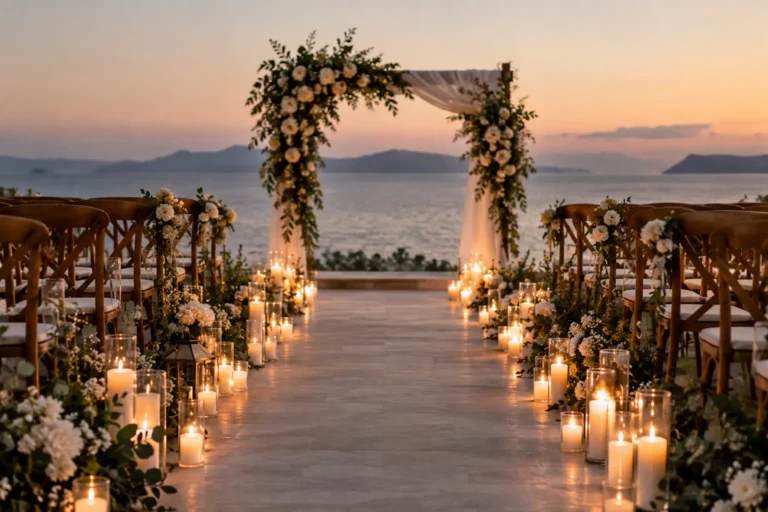
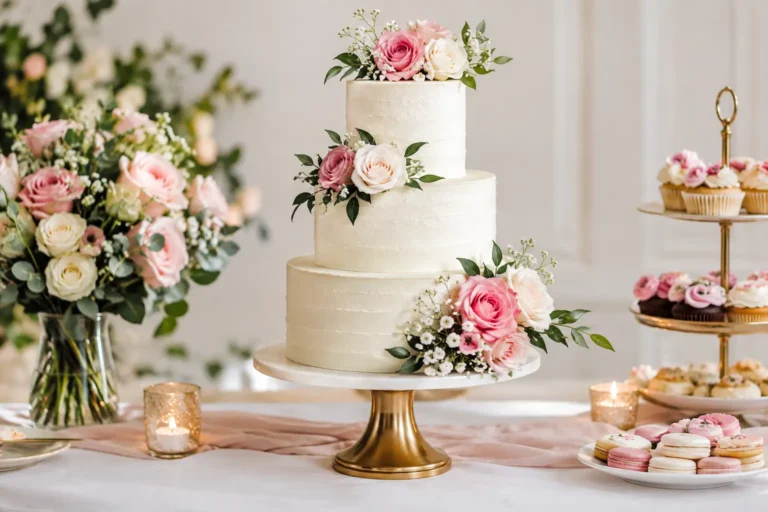
A destination wedding asks guests to give more than a single afternoon. They may spend savings, annual leave, and precious time travelling to celebrate you in a place they have never seen. The most beautiful guide to destination wedding etiquette begins there: with gratitude made visible through clear communication, thoughtful pacing, and a celebration that feels generous rather than demanding.
For couples drawn to a sun-washed villa, a quiet Provençal estate, or a city weekend shaped by old-world architecture, etiquette need not flatten the romance. It gives the experience its grace. When each invitation, event, and practical detail is considered through the eyes of a guest, the atmosphere becomes lighter for everyone.
Guide to Destination Wedding Etiquette: Begin With the Invitation
The invitation is not simply a beautiful object, though it can certainly be one. It is your guests’ first practical map of the weekend. Save the dates should be sent earlier than for a local wedding, ideally nine to twelve months ahead. This allows guests to compare flights, request time away from work, arrange childcare, and decide with honesty whether the journey is possible.
A formal invitation can follow around four to six months before the celebration, with an RSVP date that leaves enough time for final supplier numbers. Include the essential information plainly: the nearest airport or station, the wedding location, the dates and timing of key events, a recommended arrival day, dress guidance, and the level of formality expected. A wedding website or thoughtfully designed information card can hold fuller details without making the invitation suite feel crowded.
Avoid treating travel as a test of devotion. A guest declining because of cost, visa requirements, health, work, or family commitments should never be made to feel they have disappointed you. A warm response protects the relationship and reflects the spirit in which you hoped they would attend.
Be precise about who is invited
Destination weddings often invite fewer people, which can make every boundary feel more visible. Be consistent about plus-ones, children, and invitations to ancillary events. If only named guests are invited, address the envelope accordingly and do not leave room for ambiguity on the RSVP form.
Children are a particularly personal decision. A late-night celebration at a cliffside venue may be best suited to adults, while a relaxed countryside weekend might naturally welcome families. Neither choice is impolite when it is communicated kindly and without apology. If children are invited, consider a quieter meal option, earlier entertainment, or a trusted local sitter service for parents who would value it.
Be Clear About Money, Without Losing Warmth
The central rule is simple: guests generally pay for their own travel and accommodation, while the couple hosts the wedding-day hospitality. Yet destination celebrations are rarely quite so neat. The etiquette lies in being transparent about what you will provide and considerate about the financial reality you are creating.
You are not expected to subsidise every flight or hotel room. You should, however, offer choices. A small edit of accommodation at different price points, from a refined hotel close to the venue to a well-reviewed guesthouse or rental nearby, helps guests find a comfortable fit. If you have arranged a room block, say whether it is merely held for guests or whether a discount applies.
It is generous to cover transport when the venue is difficult to reach, especially after an evening of champagne and dancing. A coach from the main hotel area or a clear taxi arrangement is both a safety measure and a kindness. For a multi-day gathering, hosting a welcome drink, wedding breakfast, and farewell brunch is traditional only if your budget allows. One beautifully considered welcome evening and an excellent wedding day can feel more gracious than an overextended programme.
Gifts require a little delicacy. Guests travelling internationally should not be expected to carry wrapped presents. A short note on your wedding website can gently say that their presence is the greatest gift, while providing a registry or honeymoon contribution option for those who wish to give. Never make a contribution feel like an entry fee.
Design a Weekend With Breathing Room
A destination wedding becomes memorable when guests can inhabit the place, not merely move between obligations. The temptation to plan a perfect itinerary is understandable, particularly when you have chosen a location rich with restaurants, gardens, galleries, or coastline. But a fully scheduled weekend can leave guests tired before the ceremony begins.
Think in anchors rather than commands. A welcome aperitif on the first evening gives everyone a moment to meet and settle. The wedding day remains the emotional centre. A casual morning coffee, beach walk, or late brunch the following day can be optional, allowing guests to join if they wish. State clearly which events are hosted and which are suggestions for independent exploration.
This approach also supports the visual rhythm of the celebration. A welcome gathering might call for candlelight, local wine, and unfussy florals; the wedding day can then unfold with its own distinct sense of ceremony. Rather than recreating a full wedding three times over, let each gathering carry a softer chapter of the same story.
Honour the setting and local customs
A destination is never just a backdrop. It has its own tempo, traditions, weather, and practical limitations. Encourage guests to dress beautifully but realistically: cobbled streets, heat, wind, sand, steep paths, and historic interiors all influence what feels comfortable. If heels will sink into grass or the ceremony takes place under direct sun, say so. This is not inelegant information. It is the difference between guests feeling cared for and guests feeling caught out.
If you are marrying in a country with particular religious, cultural, or legal customs, share the expectations respectfully. A church may require covered shoulders. A rural venue may observe quiet hours. A town may have limited taxis after midnight. Your planner, venue team, or local coordinator can help you phrase these details with clarity and warmth.
When choosing local suppliers, give them room to guide you. The best menu may be shaped by the season, the most flattering ceremony time by the light, and the most convincing tablescape by what grows nearby. A celebration feels more timeless when it belongs, even gently, to its landscape.
The Courtesy Guests Remember Most
Small gestures are often what people carry home. A welcome bag is lovely, but it need not be elaborate to feel personal. Cold water for a warm arrival, a local sweet, a concise weekend card, and a handwritten note can be enough. In places where guests are navigating a new language or unfamiliar roads, useful details matter more than expensive objects.
Consider comfort throughout the day. Offer parasols or fans for a summer ceremony, blankets for a cool evening, accessible seating for older relatives, and clear dietary planning for every guest who has flagged a requirement. If the setting is remote, make sure guests know when to leave, how to get back, and whom to contact if plans change.
Timeliness is another form of hospitality. Start events close to the stated time, especially when transport has been arranged. A destination celebration can be relaxed without becoming vague. Guests feel at ease when they understand the rhythm of the day and trust that someone is holding the practical details.
Guide to Destination Wedding Etiquette for Guests
Guests also have a role in preserving the ease of the occasion. RSVP promptly, book travel as soon as you can, and read the information provided before asking the couple questions that have already been answered. If a cost or complication means you cannot attend, decline early and warmly rather than waiting in the hope that something changes.
Once you arrive, honour the effort behind the gathering. Be on time, respect the dress code and local customs, and avoid assuming every meal or excursion is hosted. A destination wedding is not a free holiday, even when the setting is spectacular. If you have accepted an invitation, make space to be present for the ceremony and celebration rather than treating them as optional moments around a personal itinerary.
For the couple, the final act of etiquette is simple: thank people well. A handwritten note after the wedding remains one of the most meaningful gestures, particularly for those who travelled far. Mention something specific if you can – the speech that made you laugh, the help offered in the rain, or the joy of seeing them at breakfast the next morning.
The goal is not perfection, nor a weekend choreographed so tightly that nobody can exhale. It is to create a gathering in which every guest feels that their presence was wanted, their journey was understood, and the beauty around them was chosen with love.