
A beautifully styled wedding table is not simply a collection of lovely things. It is the place where guests settle in, raise a glass, exchange stories and feel the atmosphere of your celebration most closely. When considering how to style wedding tables, begin with that experience rather than a single image. The most memorable settings feel composed but never overworked – like an extension of the gathering itself.
The aim is not to fill every inch of the table. It is to create rhythm through light, texture, proportion and the small details that quietly tell your story. A hand-written menu, a bowl of sun-ripened fruit, a linen napkin in the shade of the landscape outside: each can be enough when chosen with care.
Begin with the feeling of the room
Before selecting candles or flowers, pause to consider the setting. A table laid beneath olive trees in Puglia wants something different from one in a Georgian dining room or a glass-walled city space. Notice the architecture, the natural light, the season and the way guests will move through the room. These are not restrictions; they are the beginnings of a design that belongs exactly where it is.
I like to describe a table’s direction in one sentence. It might be soft summer supper in an English walled garden, old-world romance in a Parisian salon, or sunlit coastal lunch with a Mediterranean ease. This simple phrase becomes a useful filter. If a decorative choice does not support the feeling, it can be left behind.
Your wider wedding palette should guide the table, but it need not be repeated literally. If bridesmaids are in pale blue, for example, the tables might hold weathered blue-grey glass, butter-cream linen and flowers with a whisper of cornflower. Cohesion comes from considered echoes, not from matching every element exactly.
Let the table shape lead the composition
Round tables naturally create intimacy and suit a central arrangement with a generous ring of candlelight. Long banquet tables feel more narrative: guests’ eyes travel along them, so they invite a looser, more layered composition. You might place low vessels in a gentle sequence, with fruit, taper candles and folded menus creating movement between them.
For long tables, avoid making one uninterrupted floral runner unless the setting genuinely calls for a dense, abundant look. Separate moments of flowers often feel more refined and leave space for conversation, serving dishes and the natural texture of the linen. With round tables, keep the central piece in proportion to the diameter. A modest design can disappear, while an overly broad one can make the table feel crowded before a single plate has arrived.
How to style wedding tables from the linen up
Linen is the quiet foundation of a beautiful table. It changes the way candlelight falls, softens formal furniture and gives every object above it a sense of place. Crisp white can be exquisite in a grand room or against deep green countryside, but do not assume it is the only route to timelessness. Oatmeal, warm ivory, faded rose, stone and muted sage all bring depth while remaining serene.
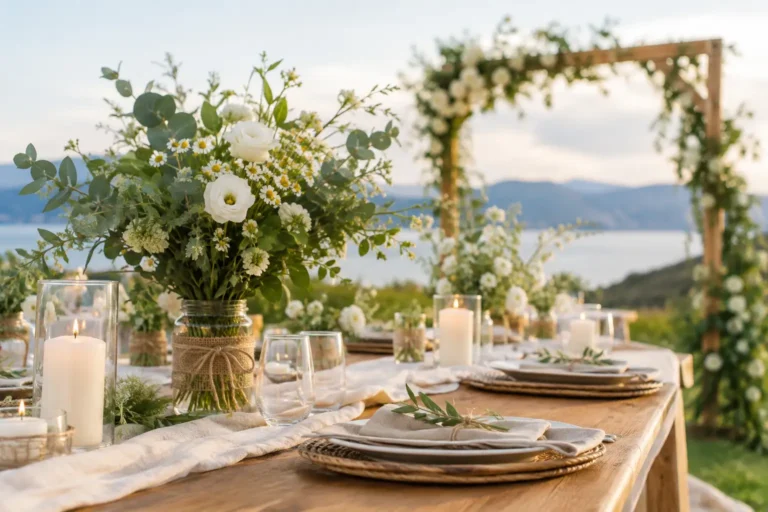
A full cloth creates softness and works especially well when venue tables are visually plain. Bare wood can feel relaxed and sculptural, particularly for a vineyard, coastal or countryside celebration. The trade-off is that a bare table needs enough warmth elsewhere – cloth napkins, plentiful candles or layered ceramics – to prevent the scheme from feeling sparse.
Consider layering rather than introducing more colours. A fine tablecloth beneath a narrow runner, or a softly crumpled napkin set over a charger, gives the setting dimension. Choose fabrics with a little life to them. Natural linen, cotton or silk-blend ribbons tend to photograph with more ease than anything overly shiny or rigid.
Choose place settings with restraint
The place setting is where formality and personality meet. Begin with the plates you will actually need for the meal, then build only as far as the service requires. An elegant charger can frame the setting, but it is not essential if your dinnerware already has a beautiful edge or glaze.
Mixing pieces is often more interesting than choosing a perfectly uniform set. Fine white porcelain beside handmade bread plates, or delicate cut crystal paired with quietly modern flatware, can create an atmosphere that feels collected over time. Keep one visual thread consistent, whether that is a warm metallic finish, an organic shape or a restrained palette.
Napkins offer an especially easy opportunity for softness. Let them fall naturally rather than folding them into elaborate shapes. A loose knot, a gentle tuck beneath the menu or a simple fold across the plate feels far more in keeping with effortless romance. If you are adding a sprig of herb, silk ribbon or place card, make sure guests can remove it gracefully without dismantling their setting.
Build floral moments, not floral obstacles
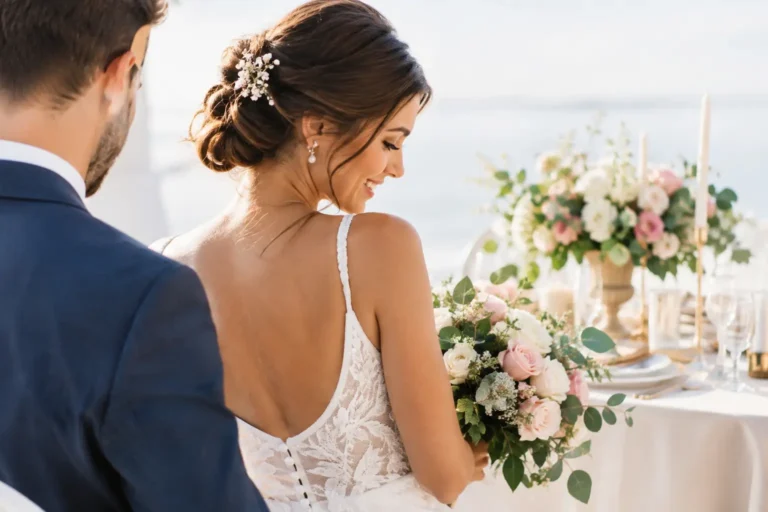
Flowers bring movement and emotional warmth, but the most successful wedding table flowers consider the people seated around them. Guests should be able to see one another without leaning around an arrangement. Low, garden-inspired designs are reliably inviting; taller arrangements can be striking in grand rooms, provided their stems begin above eye level and the bases remain beautifully considered.
Ask your florist to work with the season and the destination. Local stems often have more character, travel better and make a scheme feel rooted in its place. In spring, blossom branches and tulips can feel wonderfully alive. Late summer might call for dahlias, cosmos, herbs and fruit. In winter, sculptural branches, hellebores and layers of candlelight can be more evocative than trying to recreate a high-summer garden indoors.
Flowers need not carry the entire table. Bowls of pears, figs, citrus or cherries can add colour and a sense of abundance, particularly for a destination celebration. They work best when they look generous rather than overly arranged. The difference is subtle: allow a few pieces to rest naturally beside the vessel rather than building a perfect still life.
Use candlelight to create atmosphere
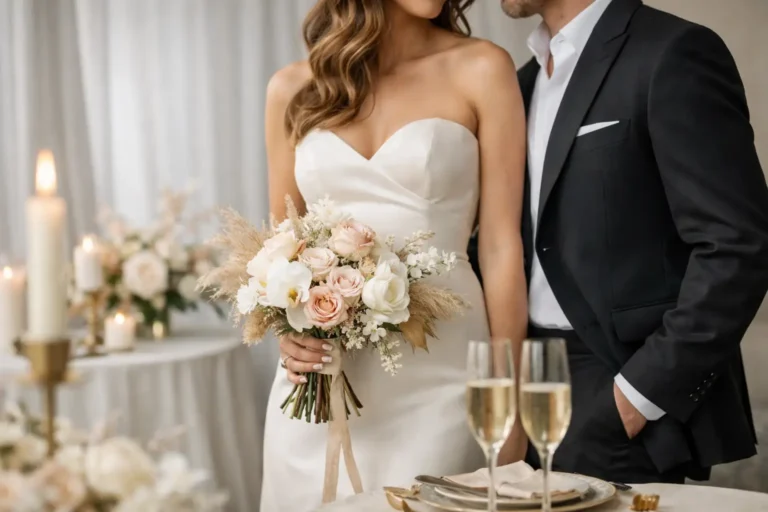
If flowers are the romance, candlelight is the atmosphere. It draws the table together after daylight fades and makes even a restrained setting feel celebratory. Use a mixture of heights, but repeat vessels or colours so the scene remains calm. Small votives create a soft, intimate glow, while taper candles give a table its vertical rhythm.
Confirm your venue’s rules early. Some properties allow only enclosed flames, while historic venues and outdoor locations may have particular requirements. Good-quality LED candles are a worthwhile alternative when real flame is not possible, especially if they have a warm, gentle flicker rather than a cool white light.
Be practical with tapers. Place them where sleeves, menus and floral foliage will not catch, and use dripless candles if you are working with pale linen or antique furniture. Candlelight should feel effortless to guests, even if the preparation behind it has been meticulous.
Make the personal details part of the design
A wedding table becomes yours through the details that could not belong to anybody else. Perhaps the menu reflects a meal you shared on holiday, the place cards carry a line from a favourite poem, or the table names reference cities that have shaped your relationship. These elements have more impact when they are woven quietly into the composition instead of presented as separate décor.
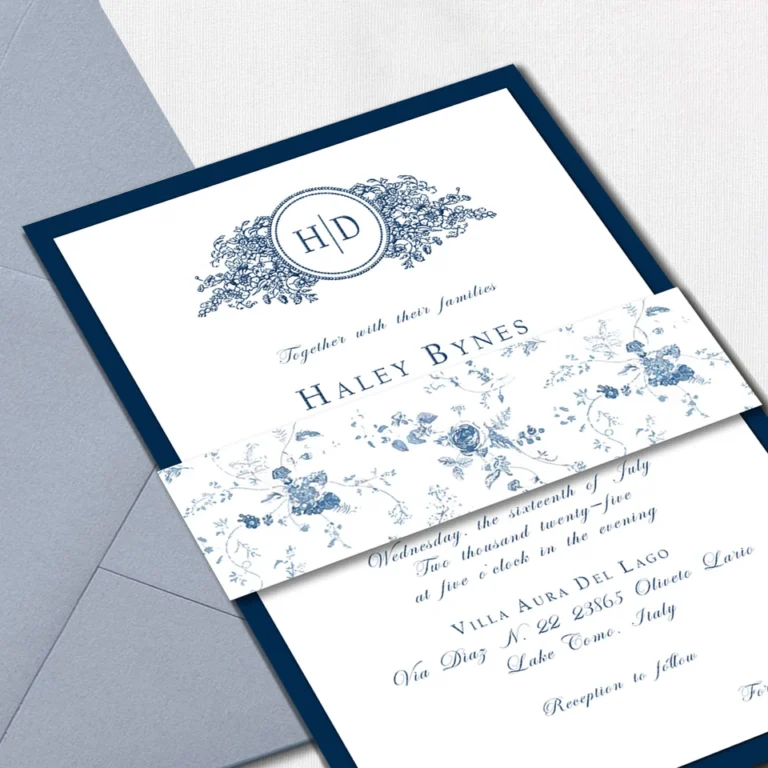
Stationery is particularly powerful here. Its paper, typography and tone connect the first invitation guests receive with the final place they find at dinner. A textured card, soft deckled edge or discreet wax seal can bring a tactile sense of occasion, but legibility should always come first. Guests should be able to find their seats in low light without searching through a crowded display.
Do not forget the chairs, either. They form a visual border around every table and occupy a large part of the room in photographs. If the venue chairs are lovely, let them remain. If they are not, a simple slipcover, a tailored cushion or a considered hire choice may transform the overall effect more than another decorative layer on the tabletop.
Edit before the room fills
The final styling decision is often what you remove. Once your table is laid, look at it from a seated height as well as from the doorway. Can guests see each other? Is there space for water, wine and the dishes that will arrive? Does every material belong to the same visual world?
If the answer is almost yes, take away one thing. A table with breathing room feels luxurious because it allows the craftsmanship of each element to be noticed. At The Elegant Glow, I return to this idea often: refinement is not about adding more, but about choosing what deserves to stay.
As the evening begins, your tables will become less about the exact placement of every candle and more about the life around them. Design them with enough beauty to hold the room, and enough ease to let laughter, conversation and candlelit memories take over.
2 Comments