
A wedding can have the most beautiful flowers, exquisite stationery and a remarkable setting, yet still feel slightly disconnected if every choice has been made in isolation. Learning how to choose wedding aesthetic is less about finding a label for your Pinterest board and more about noticing the atmosphere you want your guests to carry home: perhaps candlelit and intimate, sun-washed and effortless, or quietly formal with a sense of old-world ceremony.
Begin with your relationship, not a trend
Before collecting another image, consider the texture of the celebration you are creating together. Think beyond what it will look like in photographs. Where do you feel most yourselves? It may be over a long dinner in a favourite restaurant, wandering through a European city on holiday, hosting friends at home, or dressed beautifully for an evening that feels just a little theatrical.
The answers reveal more than a preference for a colour palette. A couple who treasures unhurried suppers may be drawn to low candlelight, gathered linens and a table designed for conversation. A pair who loves coastal travel might lean towards chalky stone, fresh citrus, sculptural florals and light that feels open rather than overly styled. Your aesthetic should make emotional sense before it makes visual sense.
Write down a few words that describe the feeling, rather than the objects. Consider phrases such as luminous and relaxed, garden romance with restraint, modern European intimacy, or joyful formality. These become a gentle filter when an abundance of beautiful options begins competing for attention.
How to choose wedding aesthetic by starting with feeling
A clear aesthetic has two layers. The first is emotional: the mood of the day. The second is visual: the materials, colours, shapes and styling choices that express that mood. Couples often begin with the visual layer because it is easier to save an image of a bouquet than to articulate a feeling. Yet the feeling is what gives those details a shared direction.
Turn a mood into a visual language
If your desired atmosphere is soft, luminous and romantic, you may be drawn to sheer fabrics, ivory paper, delicate movement in the flowers and a warm, natural palette. If it is architectural and contemporary, perhaps the visual language calls for cleaner linework, deliberate negative space, tailored attire and considered sculptural forms.
There is no requirement for every detail to match perfectly. In fact, a wedding becomes more interesting when it has contrast: antique glass against modern typography, a formal venue with loose garden flowers, or a minimal bridal look softened by a hand-torn silk ribbon. The question is whether the contrast feels intentional. Choose one dominant mood, then let a secondary note add personality.
Build an edited reference collection
Inspiration is useful until it becomes a crowded room where every idea is speaking at once. Create a private collection, then return to it after a few days with a more discerning eye. Save only the images that create an immediate emotional response, not those you think you ought to like because they are everywhere.
Look for repetition. You may notice that you keep saving dusky blue rooms, ivory silk dresses, weathered stone facades and painterly arrangements in cream and plum. That pattern is more valuable than a single flawless image. It points to a world you can build from, rather than a moment you might imitate.
Aim for a compact reference board with room to breathe. Include imagery beyond weddings: interiors, art, landscapes, fashion, books, hotel details and dinner tables. These references often reveal a more personal point of view than wedding imagery alone, and they help your suppliers understand the atmosphere without copying someone else’s celebration.
Let the venue lead, but not dictate
Your venue is one of the largest visual gestures of the day, so it deserves a meaningful role in the aesthetic. A Parisian-style townhouse, a converted barn, a coastal villa and a contemporary gallery each bring their own language of light, proportion and texture. Fighting that language can consume budget and create a result that feels forced.
Instead, identify what is already beautiful. Perhaps it is the patina of the walls, the geometry of the windows, the surrounding landscape or the way late-afternoon light enters the dining room. Enhance those qualities. An ornate historic room may need fewer decorative layers than a blank-slate space, while a simple marquee gives you more freedom to establish a complete visual world.
This does not mean you must choose a rustic aesthetic for a countryside venue or a traditional one for a manor house. It means using the setting as a conversation partner. A refined, modern tablescape in an old estate can be striking precisely because it respects the building while introducing a fresh point of view.
Create hierarchy rather than buying more
Luxury is not always expressed through abundance. Often, it comes from restraint, excellent materials and the confidence to let a few meaningful gestures take focus. Decide where you want the eye to rest: a breathtaking ceremony backdrop, a beautifully dressed dining table, an extraordinary floral installation, or stationery that sets the tone from the first envelope.
Give those focal points the greater share of attention and budget. Then keep the supporting elements quieter. If your flowers are lush and expressive, consider simple tableware and uncluttered signage. If the room itself is dramatic, a restrained palette may allow its character to remain visible. This balance creates the polished, editorial quality many couples admire, without making the day feel overdesigned.
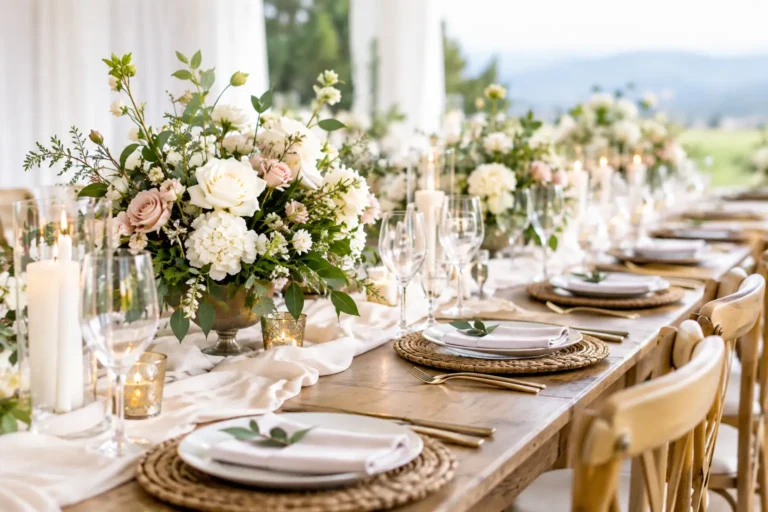
Repeated details also create cohesion. A curved motif from the invitation might reappear in menu cards and place settings. The olive green of the ceremony ribbons could return in the taper candles. These connections need not be obvious to guests. They simply create a feeling of care.
Test every choice against real life
An aesthetic must work for the way you want to celebrate. A formal black-tie dinner can be unforgettable, but it may not suit a beach ceremony where everyone is barefoot by sunset. Similarly, an all-white palette is timeless, but it can feel stark in a venue with cool lighting or limited natural texture.
Ask practical questions early. Will the flowers available in your season support the look? Does the dress allow you to move, eat and dance as you wish? Will guests understand the dress code? Can the lighting shift from ceremony to dinner to dancing without losing its warmth? Practical considerations do not dilute artistry. They protect it.
It also helps to consider the full guest experience. The scent of the flowers, the weight of the menu card, the music as guests arrive and the pace of the meal all shape atmosphere. Aesthetic is not merely what appears in a photograph. It is the feeling created when visual beauty and genuine hospitality meet.
Make space for heritage, place and personality
The most lasting wedding aesthetics rarely come from a single trend. They draw on the couple’s lives: family traditions, places that matter, shared travels, a cultural ritual, or even a colour that recalls a beloved childhood home. These references give a celebration emotional depth and prevent it from feeling like a template.
Use them with a light hand. A destination wedding in Italy need not be filled with every expected motif to feel connected to its setting. A locally sourced menu, ceramic place settings or a particular style of aperitivo may say far more than an obvious theme. Thoughtful details feel more elegant when they are woven through the day rather than announced.
At The Elegant Glow, I always return to the idea that a wedding is an intentional piece of art, but never a performance. Your guests should recognise the care behind it while still feeling free to relax inside it.
Give your aesthetic a working name
Once your direction feels clear, give it a simple working name for planning purposes. It might be soft Italian garden, modern candlelit romance, or coastal elegance in faded blues. This is not a rigid theme. It is a shorthand that helps you, your planner and your creative team make aligned decisions.
If a choice does not belong in that world, it may still be lovely, but it is probably not for this wedding. That small distinction is one of the kindest ways to reduce decision fatigue.
Let your final choices feel a little like gathering objects for a home you have not yet entered: each one beautiful on its own, more meaningful because of the others, and entirely shaped by the life you hope to share there.

2 Comments